

On August 16th, 1926, Time magazine reported on a gathering of some 4,000 pacifists meeting for the Fifth International Democratic Peace Conference in Rheims, France. Also known as Reims, the city sits in the northeast region of France and was particularly hard hit by German forces during World War I.
When the conference delegates assembled in the decade after the end of the war, they proclaimed August to be International Peace Month and stated their intention of pursuing “an intensive study of international peace work.” Just two years later and down the road in Paris, a commitment to international peace was adopted when the United States, France, and many other world powers signed the Kellogg-Briand Pact. That agreement called on signatories to use negotiation and cooperation to avoid future armed conflict.
The horrors of war and the promise of peace were on the minds of most Americans in the 1920s, including those at the University of Idaho. Hope for a future spurred the creation of the William Edgar Borah Outlawry of War Foundation at U of I. The Foundation was established in 1929 by a grant from Salmon Oliver Levinson, a prominent Chicago attorney, peace movement activist, and known to have drafted the Kellogg-Briand Pact. Levinson greatly admired Senator Borah, especially for his help getting the pact through the U.S. Senate.
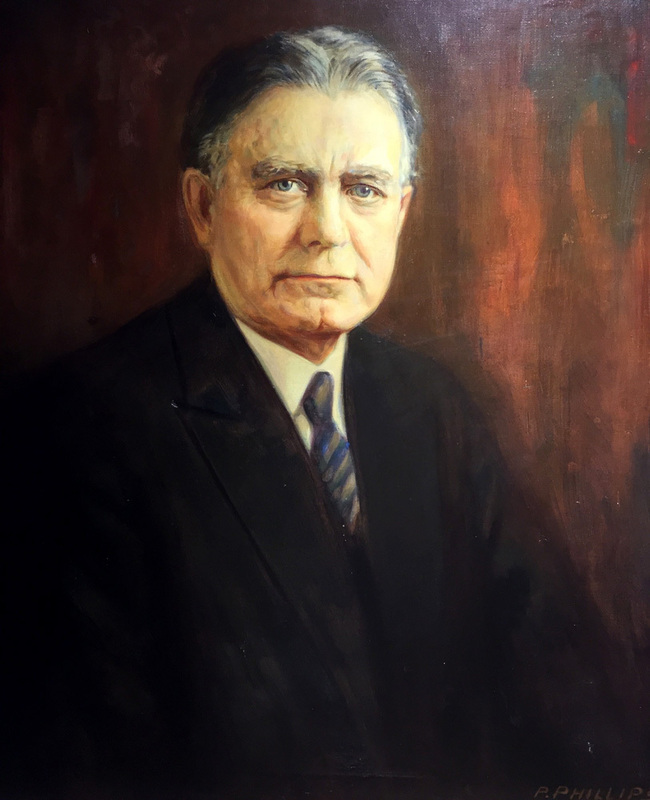
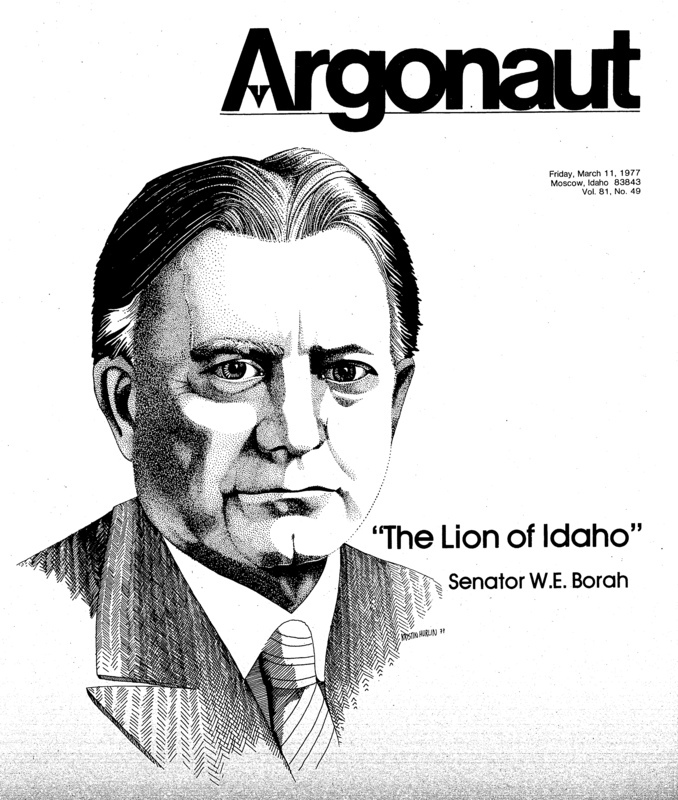
Senator Borah had reluctantly voted to authorize U.S. entry into WWI, but openly touted isolationist views that were informed by his agrarian beliefs. He was part of a small but powerful group of senators dubbed the Irreconcilables who refused to accept the terms of the Treaty of Versailles because they felt the League of Nations would compel American intervention into another European war.
His opposition to international alliances did not preclude Borah for advocating for the “outlawry of war,” an idea that one historian described as “a nationalistic peace program that proposed to destroy the institution of war by withdrawing from it the sanction of international law.” The General Treaty for Renunciation of War as an Instrument of National Policy, or Kellogg-Briand Pact, fit Borah’s vision because it held signatories to a promise but not much more. As the Chair of the Senate’s Committee on Foreign Relations, Borah’s support of the pact was crucial.
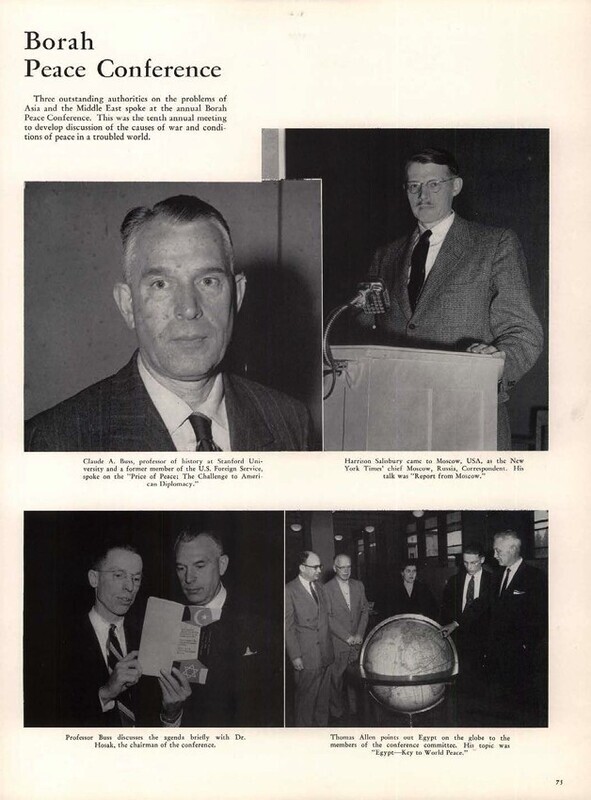
Senator Borah’s commitment to international peace inspired the creation of the U of I’s Outlawry of War Foundation. Administration was entrusted by the university Board of Regents to a group of faculty known as the Borah Committee. As stated in the resolution of the regents, “The purpose of the Foundation is to establish in the University of Idaho a lectureship for the promotion of a better understanding of international relations, of the age-old struggle with the baffling problem of war, and of the vital part played in its solution by William Edgar Borah.” The Foundation offered its first program in 1931, with Senator Borah in attendance. Financial strains of that decade kept it from offering a second event until 1938, when the foundation sponsored an address by Mrs. Franklin D. Roosevelt.
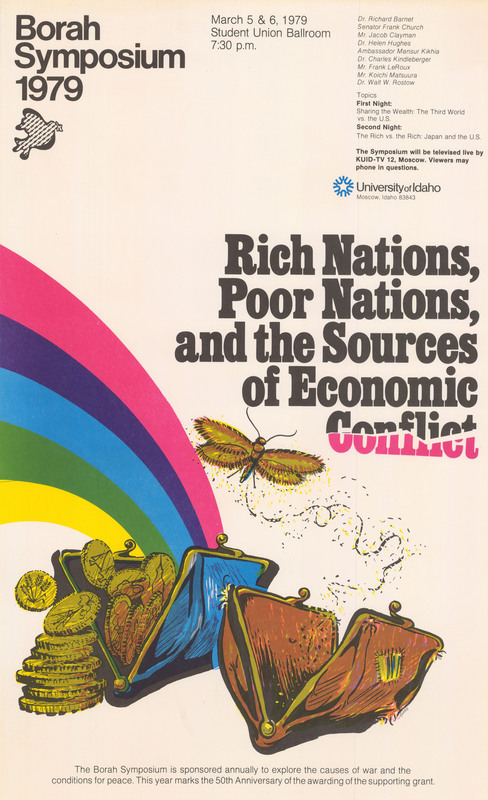
Since 1948 the foundation has underwritten annual conferences concerned with specific facets of the general theme, the causes of war and the conditions for peace. In selecting speakers for the conferences, every effort is made to bring outstanding academicians and national and international authorities in diverse fields to the campus to participate in these deliberations. This year’s Borah Symposium, themed “Great Power Competition,” will take place September 29th to October 1st. Each symposium, held annually since 1948, brings together world leaders, diplomats, scholars and activists to discuss current problems facing our global community and to offer solutions.
Resources
Campus Artwork Borah_Painting
PG 101 Gem of the Mountains photograph collection, 1948-1968