

Post written by Kacie Kay, Special Collections Intern
When most people think of the University of Idaho Special Collections and Archives, they might expect to see state history, university materials, and local stories. One of the most unexpected things in the collections are two ancient cuneiform tablets from the Sumerian or Akkadian era, the early people of Mesopotamia.
Cuneiform is one of the earliest forms of organized writing, originating in the Sumerian era of ancient Mesopotamia, around 3500 BCE. Using clay and a stylus, indents were made that first were pictograms, like Egyptian hieroglyphs, but evolved into phonograms based on language sounds. Many great early civilizations that came from Mesopotamia used cuneiform. The two tablets at Special Collections and over 30,000 other tablets like them were excavated from the ancient city of Jokha and Umma in modern-day Iraq. The specific tablets at the University of Idaho are dated from 2400 to 2340 BCE, around the end of the Early Dynastic Period III of Mesopotamia. This period is defined by archeologists by the connected development of the area and is used to categorize artifacts and organize the greater timeline of early civilizations
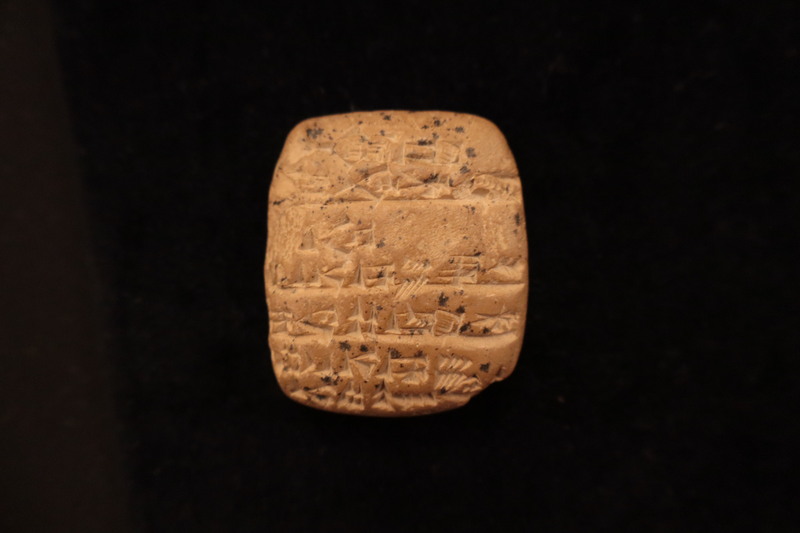
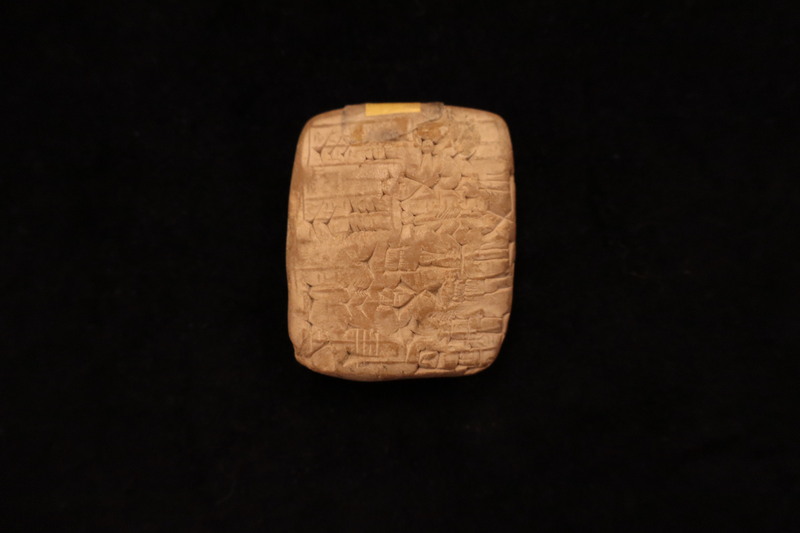
The two clay tablets that are in the archives were first donated to the University of Idaho by the family of Major William Wells Woods, three years after his death, in March of 1923. Born in Iowa in 1841, W. W. Woods studied law until he joined the army for the Civil War; he eventually was discharged with his rank as Major. For a time, he lived in Utah with members of his family, including his uncle, who served as the mayor of Salt Lake City; Woods married his wife Melvina and continued to practice law. He first came to Idaho in 1884, settling down with his family in Murray in 1988 as a lawyer before moving to Wallace in 1890, when the seat of Shoshone County moved. In his work as a lawyer, Woods focused on mining litigation and in 1906 became the judge for the county until his death in 1920 at 79 years old.
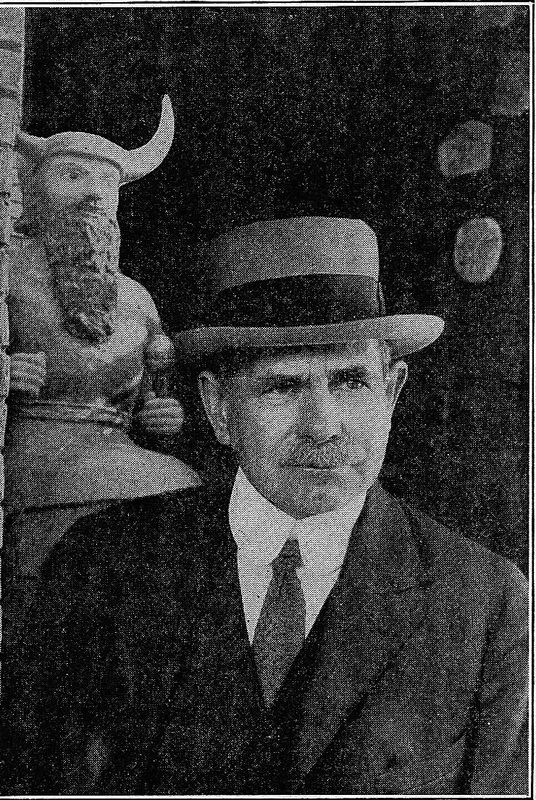
Despite being donated to the University of Idaho by W.W. Woods, the tablets were first excavated by Edgar J. Banks, a noted archeologist who spent time in modern day Iraq for excavations of Sumerian cities. He acquired many of his tablets through different means- some found during his expeditions, and many others purchased in the Ottoman Empire’s antiquities market for the purpose of reselling them abroad. After World War I and his return to the United States, Banks traveled the country and contacted many universities, museums, libraries, and personal collectors to sell his cuneiform tablets to. In a letter to a Georgia professor, Banks describes ten tablets that he was looking to sell. While we don’t have the reply to that letter, it matches the descriptions of the ten tablets that were donated to the University of Idaho by W.W. Woods.
An Argonaut article from March 1923 dives into the origins of these tablets further. Woods was a friend of Edgar Banks and likely had heard of the tablets that Banks was looking to sell. Whether Woods purchased them or if they were given to him is unknown. After Woods death in 1923, he wanted the tablets donated to the University of Idaho. Judge J. H. Forney, the first president of the university, presented them to President A. H. Upham on behalf of the Woods family (“The Argonaut - March 9th, 1923”). At the University of Idaho, the tablets were kept in a museum on campus with many other artifacts from different eras. However, after the discontinuation of the museum in 1983, the tablets were supposedly moved to different departments. What happened to them since is a slight mystery though, as the paper trail thins and becomes harder to follow. Special Collections is home for two of them, numbers 2 and 8 from the original list of ten.
The cuneiform tablets in the University of Idaho’s Special Collections and Archives are an amazing artifact of ancient history and the development of written script. Thousands and thousands of years ago, people were writing on clay tablets that have survived time and ended up here in Idaho. While being a great academic resource for students and researchers, they are also something that is simply awe-inspiring to look at considering the history behind them. If you want to see them for yourself, please make an appointment with libspec@uidaho.edu beforehand.
Sources:
Almamori, Haider. “Gišša (Umm al-Aqarib), Umma (Jokha), and Lagaš in the Early Dynastic III Period,” Academia.
Babylonian Clay Tablets, MG 5723, University of Idaho Library Special Collections and Archives, Moscow, ID.
“Early Dynastic Mesopotamia.” Human Relations Area Files, Yale University.
“Judge William Wells Woods.” Find A Grave.
Mark, Joshua J. “Cuneiform: The Writing System That Made History.” World History Encyclopedia, 10 Mar, 2026.
Mohr, Sarah. “Untangling the Many Faces of Edgar James Banks: Archaeologist, Lecturer, and Film Producer.” Bulletin of the History of Archaeology, vol. 36, no. 1, Jan 14, 2026.
“Professor Axtell Explains History of Ancient Tablets,” The Argonaut - March 9th, 1923, Argonaut Archive, University of Idaho Library Digital Collections.
“Woods, William W.” Soldiers and Sailors Database, National Parks Service.
Image Sources:
Babylonian Clay Tablets, MG 5723, University of Idaho Library Special Collections and Archives, Moscow, ID.
“Edgar James Banks.” The Photodramatist, Mar. 1922, Wikimedia Commons.
