

Post written by Kate Morrison, Special Collections student staff member
Trees have the unique ability to store the past. Thousands of years can be packed into their intricate layers of growth. Standing before us are monuments of history and we often take these data banks for granted. Each day we pass by hundreds of trees without a second thought to the information they hold. Even without our consideration, trees continue to file away what is and what has been with each centimeter they grow.
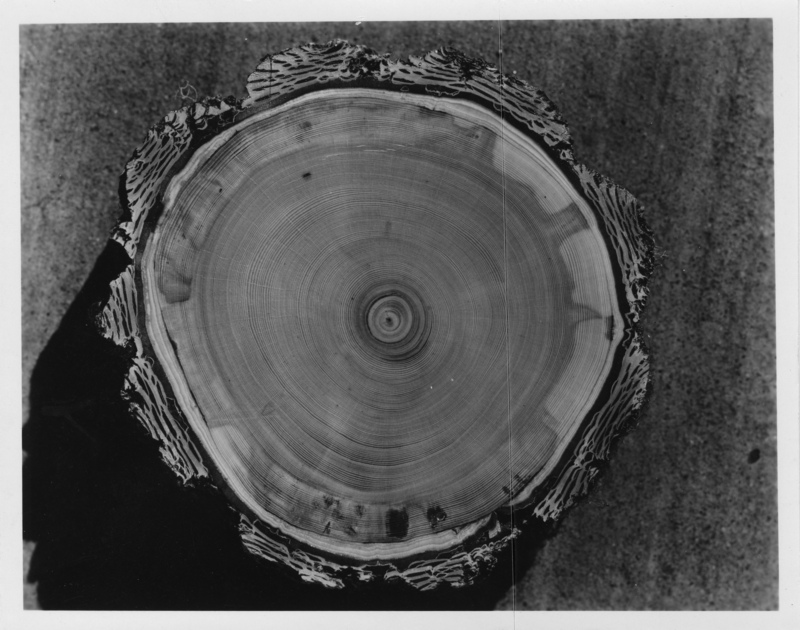
For most of human existence, scientists and thinkers, from Pliny the Elder to Charles Darwin, have been enthralled by these natural information systems. To this day, we continue to study tree cores and growth rings to hopefully peek into the environmental past. Others have devoted their lives to protecting trees from external predators, such as the invasive insect bark beetles. One such scientist who saw the importance of understanding these interactions and the value of trees is Malcolm Furniss.
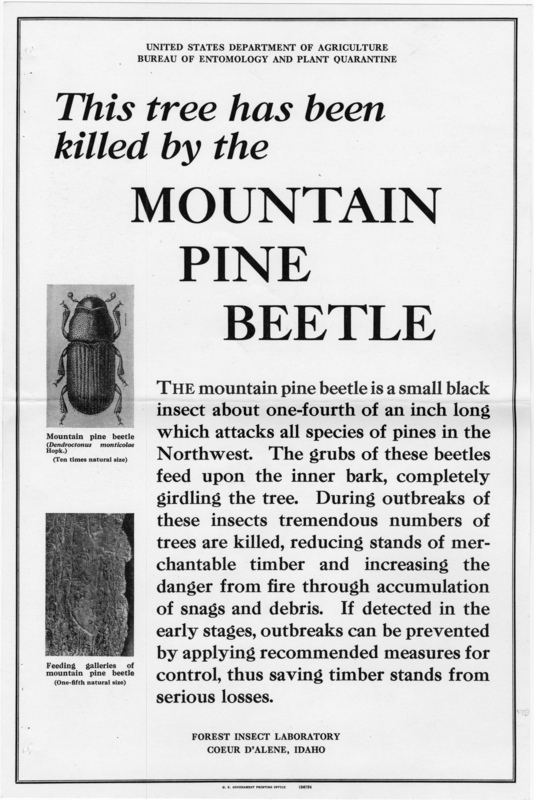
Malcolm Furniss, or often referred to as “Mal”, worked as a lead research forest entomologist for the U.S. Forest Service until his appointment as a visiting research professor of entomology at the University of Idaho in 1982. He is an expert in the western bark beetle, an avid outdoorsman, and has worked with the Forest Historical Society to preserve forest ecological history. While processing this collection, I found much of Furniss’ work to be meticulously organized and given exceptional care.
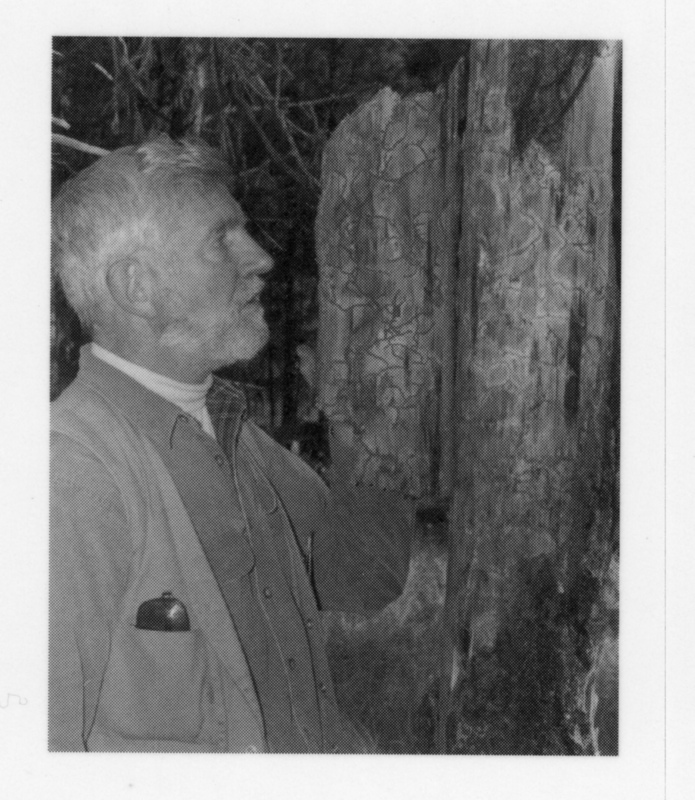
Much like his study specimens, Furniss has been a staunch recorder of history. This was clear when I first opened the numerous filing cabinets delivered to the University of Idaho’s Department of Special Collections and Archives. I found myself engulfed in his descriptions of field work, photographs, and historical writings of past entomologists who advanced our understanding of insect-flora interactions. It became apparent to me while reading his early work on his doctoral dissertation that Furniss’ devotion to forestry flourished early in his career. This care for his work can be seen throughout his years of service in forest ecology and now through the new students following his path in entomology.