

Post written by Callie Galford, Special Collections Research Assistant
After I graduated with a bachelor’s degree in English in the Spring of 2025, I planned to wait to pursue a master’s degree until my child (who is currently three years old) was in school. But as the summer hit its peak in both heat and opportunity, I received an email from Jennifer Ladino, University of Idaho’s director of the MA English program, co-director of the Confluence Lab, and English professor. She relayed to me, and the other potential candidates, a position which had opened up through the College of Natural Resources (CNR) and the English Department as a research assistant for the next two years in the MA program; it started in the fall.
I didn’t know what to make of this email because it had fallen into my soupy mess of indecision on whether I should apply to a job for the city, some online writing jobs, or remain in my position as a trainer/barista at the local cafe. I sat with it for a little while and talked with my friends and some esteemed professors I had come to know over the years. I laid out my goals and intentions and tried to best map which opportunity served the bulk of them. I then emailed Jenn back with interest in the opportunity and was officially offered the position after going through the admissions process.
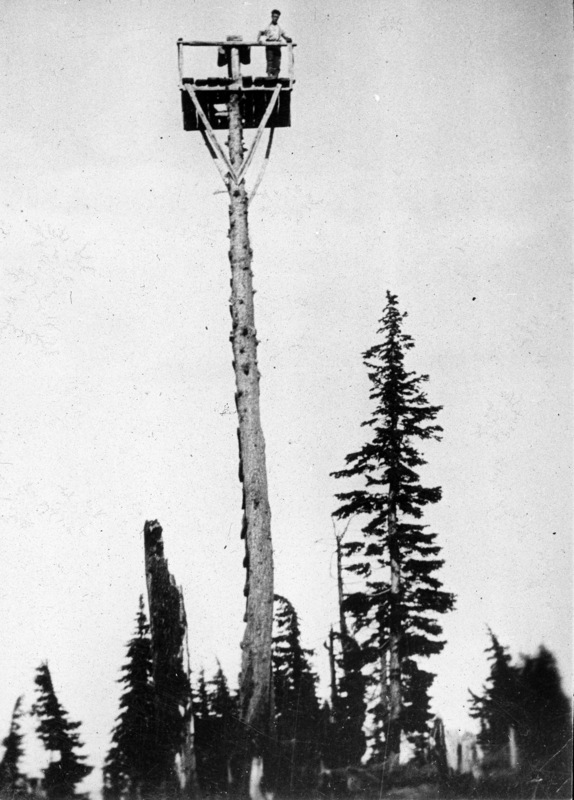
The research assistantship involves creating an updated yearbook of sorts for CNR – highlighting projects, programs, and people since 1984 when the last one was created; you can find the current book which covers years 1909 through 1984 in the UI Library’s Digital Collections: “University of Idaho: College of Forestry, Wildlife and Range Sciences 1909-1984, an Album.” Digital collections are, in part, made up of physical materials preserved by Special Collections and Archives (Spec) located in the main Library basement. Spec offered me a space to work and has become my home-base since their department is essential for working on this project.
At the beginning of this fall semester, I knew very little about the UI Libraries and nothing about Spec. Before this opportunity I thought of the main Library as well, the Library. I utilized their printers, checked out a few books in my undergrad, and worked at the Writing Center. But there was so much that I wasn’t noticing or seeing. It’s like I was looking at a green leaf and saying, “it’s a green leaf.” However, now that I’ve zoomed in on that leaf I’ve discovered in greater detail its structure. Spec is equally a complex part of the many parts within the Libraries at UI that make it essential to faculty, staff, students, and the local community. After attending some of the weekly meetings with Ben Hunter, the dean of UI Libraries, I’ve become more appreciative of Libraries as a whole as they continually work to make technology and knowledge accessible to all through programming and funding.
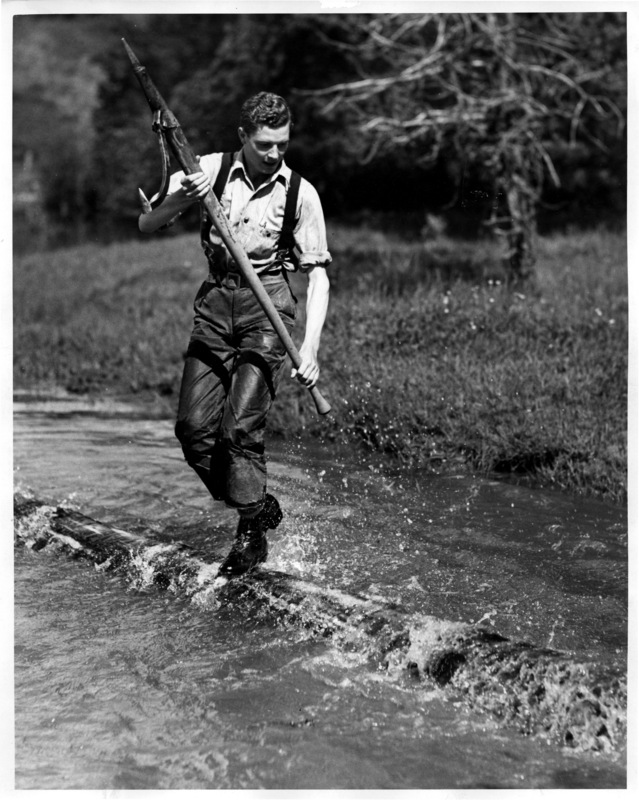
My first few weeks in Spec were dedicated to being able to find collections, understand how archiving worked, and looking through CNR materials that were uploaded to Digital Collections. The Library basement is a labyrinth of sorts with boxes on sliding shelves of collections pertaining to the University of Idaho and its interests. I walked around amazed and certainly overwhelmed during my initial tour with Dulce Kersting-Lark, the head of Spec. The Spec team also includes Kelley Moulton, archivist and special collections librarian; Rebecca Hastings, digital archivist; Ariana Burns and Zoe Baum, archives coordinators, and they were all more than ready to address all my questions.
Kelley gave me my first collection to process (a term in Spec that refers to the process of organizing, inventorying, and archiving collections for researchers); they were boxes from CNR with materials from the 1930’s to 1950’s. I noticed the care taken with keeping photographs of local forest areas, events, and correspondence between the deans, faculty, and students. What an amazing treat it was to also touch a textbook from 1934 and learn about onion skin paper: a common material for correspondence until the 1970s. Because I wasn’t a part of CNR in my undergrad I was equally in awe of all the history I had begun to discover while looking through their digital collections; history like how the Snag in the CNR building got there or how there were only three women in the department in the ’70s which sparked the development of Women in Natural Resources, a journal written and published by women in CNR.
A list of other important things I have learned in this work as an GA:
- Metal paperclips, staples, glue, and tape are all a menace in the process of archiving materials. I’ve found myself having to be quite cautious and meticulous as I pry photos from their yellowed degrading tape or glue. Everything must be stored in archival grade sleeves, folders, and boxes and kept at a particular temperature suitable for storage.
- You never know what you will come across within materials given to Spec to be archived. And there is some information that can become restricted to the public based on the sensitivity of the content or if it contains SSN’s, bank account numbers, and medical information.
- The College of Natural Resources began as the Department of Forestry in 1909 and then morphed over the years into the School of Forestry in 1917, College of Forestry in 1953, College of Forestry, Wildlife, and Range Sciences in 1963, until 2000 when they became what they are known as now.
- Physical archives are an important part in preserving history especially when history can be erased or disappear in the digital scape.
I was able to meet with CNR’s Mary-Ellen Brewick, director of development and Stephanie Perez, associate director of development and we had a great conversation about the future of this research assistantship during the course of my two years in the MA program. In the Spring I plan to write a story about the history of Idler’s Rest for the Idaho Harvester Blog and meet with James R. Fazio, associate dean and professor from 1974 to 2009, Jo Ellen Force, department head and professor from 1979 to 2017, and the dean of CNR, Dennis Becker. In the meantime, I encourage all students to check out the history of their departments. A hands-on way you could do so is by making an appointment in the Reading Room. The Spec team will procure the materials you found in searching the collections and will bring them up to you.