
The University of Idaho Library Digital Collections is an important resource for not only students and faculty at the university, but also the broader public of Idaho and beyond.
One of the primary obligations of CDIL and the Special Collections and Archives department is to highlight materials in our collections. In 2022 and 2023, the University of Idaho Special Collections and Archives received a grant from the Council on Library and Information Resources (CLIR) through the Recordings at Risk program to support the project Unheard Voices: Digitizing the Oral Histories of Underrepresented Communities in Idaho.
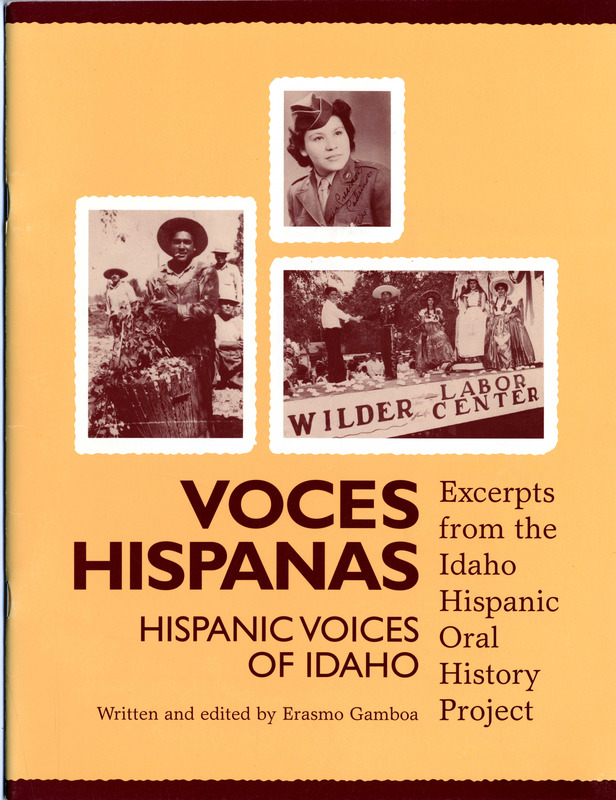
For this grant, we chose three archival collections that contained audio or video recordings of oral history interviews: MG 68 Rural Women’s History Project, MG 390 Lily Wai Committee Papers, and MG 491 Hispanic Oral History Project Interviews. The Hispanic Oral History Project consists of 21 interviews of Hispanic immigrants and descendants who lived in Idaho. The project was sponsored by the Idaho Humanities Council, the Ethnic Heritage Committee of the Idaho Centennial Commission, and the Idaho Commission on Hispanic Affairs. The interviews from this collection resulted in the publication of the book Voces Hispanas: Hispanic Voices of Idaho.
This digitization project will allow these voices to speak to us again. Oral histories provide key perspectives and data from minority communities living in a predominantly white and rural state throughout the twentieth century that may otherwise have been lost to time.
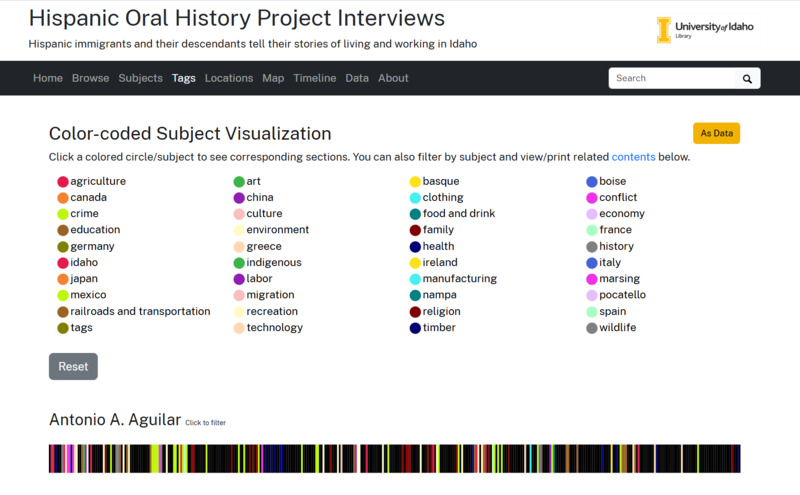
Recently, the digital collection has undergone some maintenance and updates since its initial release. A new template, specifically designed for oral history collections, allows for patrons and researchers to understand the subjects discussed during these interviews. Color-coded subject visualization allows patrons to view the various topics discussed alongside other interviews. Topics such as “Idaho,” “Mexico,” “religion,” “education,” and “migration” are just a few of the many topics that are tagged in the oral histories.
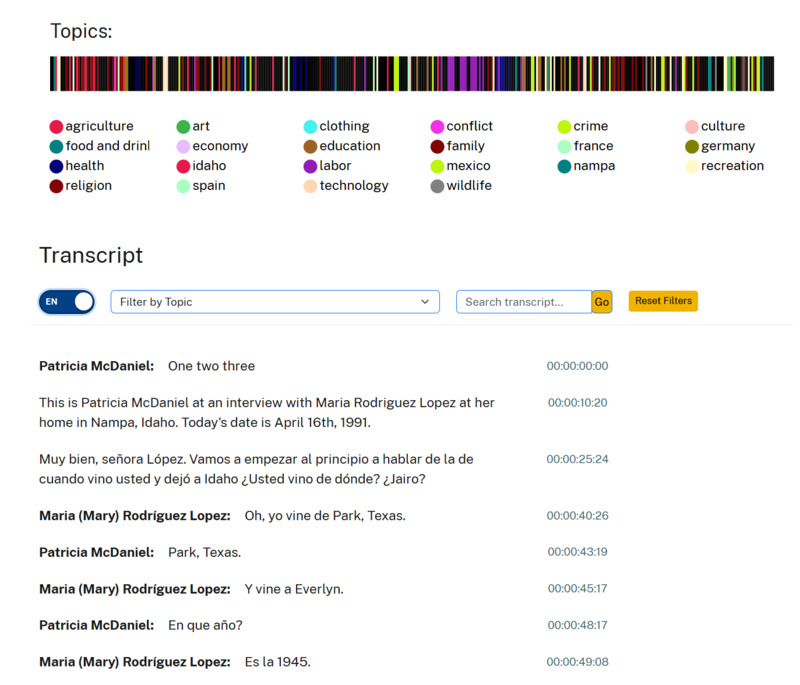
Within each individual oral history, patrons are able to see color-coded topics on a timeline, filter the interview by topic,and also view a traceable transcript of the interview. Researchers and patrons can keyword-search within the broader collection, as well as within each interview itself. Each interview is also tagged with a location, which visualizes the rurality of the state and its residents.
For interviews conducted in the Spanish language, there is an option for patrons to toggle between an English-language and Spanish-language transcript, reaching a broader and more inclusive audience that may not have been able to access the resources otherwise.
Thanks to the efforts of many faculty members, staff, and students at the Library, this project is accessible to a wide array of audiences including primary and secondary teachers, researchers, students, family members, and the general public for research, education, and other purposes. Highlighting minority voices and perspectives is essential to the preservation of our state’s history and future, and this is just one of the many collections at the University of Idaho Special Collections and Archives that contains these perspectives.