

The University of Idaho Parma Research and Extension Center is celebrating 100 years of service on June 12. For over a century, researchers at the Extension center in Parma, Idaho, have conducted work related to a wide variety of agricultural topics, including row crops, orchards, entomology, nematology, plant pathology, soil testing, and produce storage.
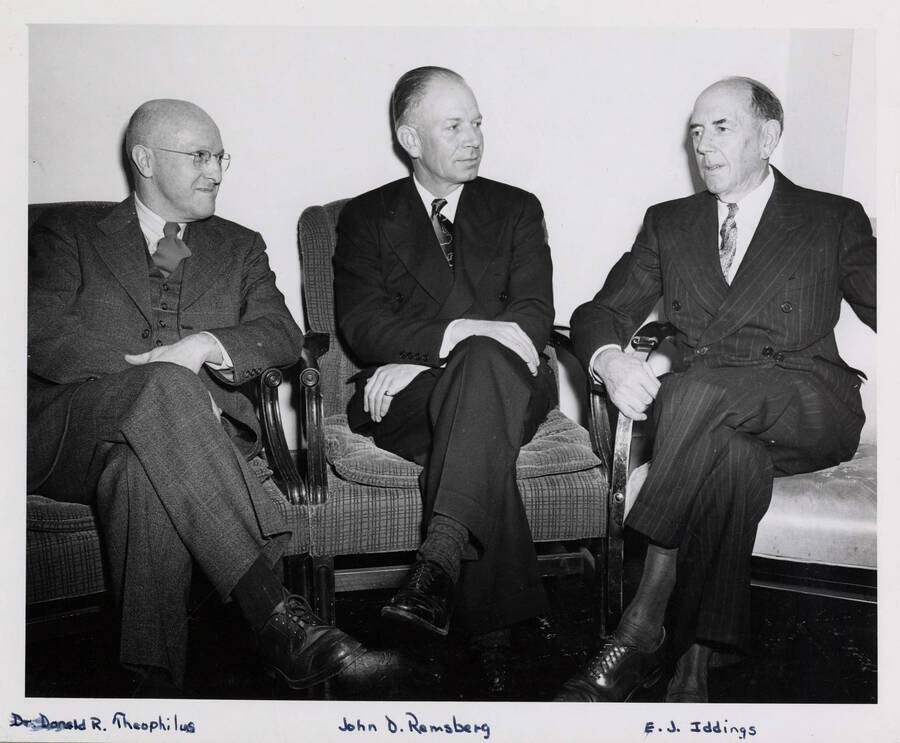
The Parma center’s story began in 1922. Two farmers in the Parma area, F. Lee Johnson and R. H. Young, were fighting a losing battle against alfalfa weevils. According to later Parma center researcher DeLance Franklin, the scientific expertise needed to deal with alfalfa weevils “simply did not exist” (Franklin). Johnson and Young presented their problem to the University of Idaho Agricultural Experiment Station in Moscow, Idaho, 300 miles to the north. Edward John Iddings, Dean of the College of Agriculture, moved two entomologists, Claude Wakefield and Don B. Whelan, to Parma to start an experimental program in weevil control.
However, the University of Idaho was unable to fund the program beyond covering salaries for Wakefield and Whelan. In 1925, Parma community members, local businesses, and professional associations pooled over $3000 to cover the costs of securing a site and constructing an office and a laboratory, formally establishing the Parma Entomological Field Station of the Idaho Agricultural Experiment Station.

After getting the alfalfa weevils under control, researchers at the Parma station turned to solutions for other agricultural pests. For its first ten years or so, the station’s focus remained entomological, addressing the various worms, moths, crickets, and so on that plagued local farmers.
The scope of the Parma center’s activities has shifted and expanded to meet the agricultural needs of farmers in southwest Idaho. According to Franklin, during the Great Depression, farmers in the area tore out apple orchards in response to low demand for apples. Parma researchers investigated how best to use and/or remediate the altered soil left behind. When supplies of European produce were largely cut off during World War II, the Parma center received help from the U.S. Department of Agriculture in developing replacement crops and seeds. Over the decades, the greater number of projects and responsibilities led to increases in staff on site, buildings and equipment, and acreage for research and experimentation.
![Parma Branch Experiment Station [7]](https://objects.lib.uidaho.edu/harvester/small/pg37-256-008_sm.jpg)
Today the Parma center comprises 200 acres for agricultural research, a greenhouse, a produce storage research facility, and the Idaho Center for Plant and Soil Health, a 9,600-square-foot, $12 million laboratory completed in 2024. In addition to ongoing research and experimentation projects, the center offers a variety of services, including plant diagnostics and cocoon testing.
The Parma station plays a key role in the University of Idaho’s mission as a public land-grant institution to serve the people of Idaho. As University of Idaho President Jesse Everett Buchanan remarked in a 1950 visit to Parma: “Here, in Idaho, our universities have come off the hill, to the people where they belong” (Franklin).


Sources
Franklin, DeLance. “Farmers fight against weevil led to Parma research center.” Idaho Free Press & The News-Tribune, February 24, 1976. A-2.
Parma Research and Extension Center. University of Idaho. https://www.uidaho.edu/idaho-ag-experiment-station/centers/parma.
Woolsey, Cassidy. “Grand opening of Idaho Center for Plant and Soil Health signals new era in agricultural research.” Ag Proud Idaho, March 18, 2024. https://www.agproud.com/articles/59335-grand-opening-of-idaho-center-for-plant-and-soil-health-signals-new-era-in-agricultural-research.