

Post written by Antonio Isiordia, Ben J. Plastino Fellow 2026
Over the summer, I had the opportunity to work with Special Collections and Archives at the University of Idaho as a fellow for the Ben J. Plastino Collection. My initial interest with the collection stemmed from the amount of material available discussing different aspects of Idaho from the 1960s through the end of the 1980s. I am not originally from the state, but have, on several occasions, found Idaho to be the saving grace of my educational career. Prior to my time as a graduate student, I was an English teacher who worked in Washington and Idaho. There are examples of when I was close to leaving my profession in education in Washington, but the opportunities in Idaho saved my career and passion I hold for education. I will always hold a love and desire to witness the continued development of education in the state for the betterment of educators, families, and students.
The preceding reputation of Idaho regarding its public education system does not paint it in the best light. There are often headlines of public education facing a budget deficit that runs the risk of cutting jobs, programs, and overall access to resources for teachers and students. As someone who holds a deep interest in public education, this prompted me to write an essay discussing the history of public-school funding within the state of Idaho and it was in this process of writing, that I found myself looking for sources that discussed the reality of funding in Idaho prior to the 21st century. It was around this time that I found out about the Ben J. Plastino Collection.
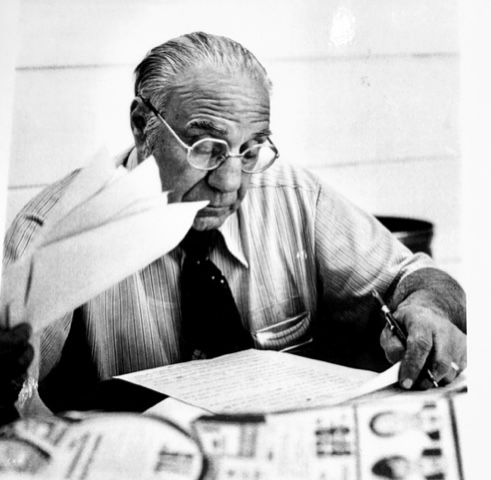
It was Professor Zachary Turpin who prompted his students in his Techniques of Archival Research course to find a topic of interest for their final in this course and utilize an archival collection within the paper as well. I knew that my topic was going to be on public school funding, and after digging through Special Collections and Archives, I found the Plastino Collection and immediately knew that this was going to be vital for my essay in that course. Not too long afterwards, Dulce Kersting-Lark presented to our class and showed us around the Special Collections and Archives in the basement of the library. She also told us about a fellowship relating to the collection I was already utilizing for my final research paper. This, combined with support and an endorsement from Professor Turpin, I applied and was selected for the fellowship.
The fellowship required at least two essays, and I knew one was going to be around public school funding in Idaho. After examining the collection further, I found extensive coverage of the U.S. Senate race between Frank Church and Steve Symms from the 1980 election. This prompted my interest in the political philosophy of Idaho, and how especially after this election, our state has held a super-majority with conservative politicians since. Prior to 1980, there was still a majority conservative leaning in the Idaho Legislature, but there was a more balanced ideological split that also allowed non-conservatives to hold state-wide and even federal office. Since 1980, with the exceptions of Cecil Andrus holding onto the governorship until 1954 and Walt Minnick becoming representative for Idaho in the U.S. House, every federal position and state-wide office was (and currently is) held by a conservative politician. This political philosophy is vital to Idaho, and that, combined with Plastino’s extensive reporting of the 1980 election and politics afterwards, led to my development of my essay topics: public school funding and the political philosophy of conservatism.
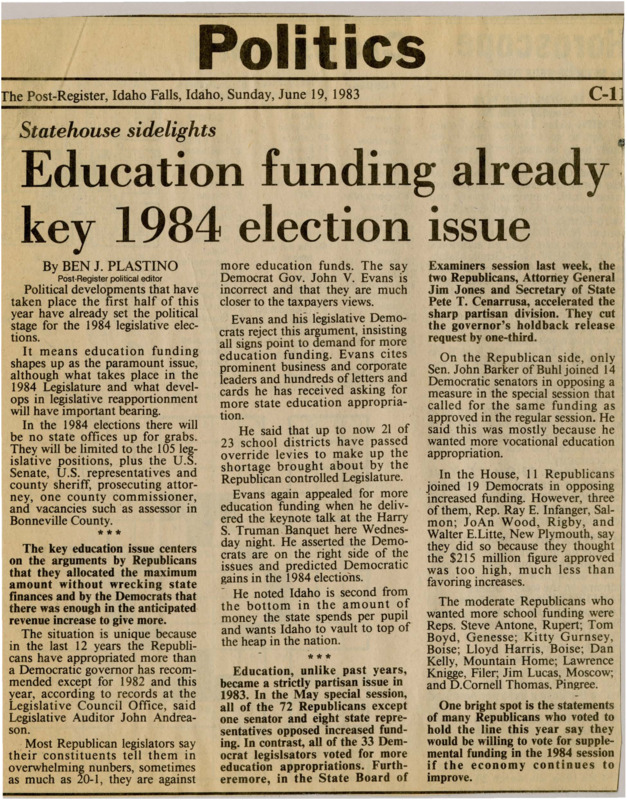
This experience proved to be a rewarding process that required me to invest considerable time and overcome a few challenges. Simply put, the Plastino Collection holds over 1,000 different items, which meant that the bulk of my time toward the beginning of my summer fellowship was spent reading through numerous articles to find information that would be suitable for either of my essay topics. This process was simplified with the digital access I held to the collection. The digitization of this collection allowed me to access these articles anywhere I needed to be. It also allowed me to record much of the information in my notes with ease, for the most part. The Optical Character Recognition (OCR) was often not creating a searchable text that was aligned properly. There were several documents that could not be highlighted or annotated due to the OCR limitations that made it difficult to utilize the digital text to its full potential. I had to get “old school” with it and simply switch screens to record full Plastino quotes or information for the vast majority of information recorded. Overall, the digital collection was beneficial, but there were some limitations that complicated the research and note-taking process.
Another aspect of this fellowship that was challenging was the removal of my voice from the essays. The fellowship committee made it clear that any writings needed to highlight only Plastino’s voice, which meant I had to learn how to write more objectively only for his thinking and beliefs to be read throughout my works. Even with my best efforts, the writing process was slow or stalled at times. There were occasions where I looked at that screen and could not find it within myself to write. I felt defeated at times. One of my worries was that I was not living up to the expectations of my committee, which spoke highly of me in anticipation of my work. I fell into a writer’s block that was motivated by worries of being insufficient for this fellowship. It was the support of many peers and my committee that pushed me to finally put words to the paper and submit first drafts for my fellowship essays.
Feedback from my supervisor showed me that my essays still needed a considerable amount of work. My immediate reaction was centered around disappointment that my work was still far from ready, but it gave me the opportunity to take that feedback and learn from it rather than let it push me back to a state of defeat. I had other sets of eyes that looked over my work, and through the help of many, I was able to bring my essays to a point of satisfaction within myself. I looked at those essays after multiple rounds of feedback and feel proud of the work I was able to achieve this summer through my fellowship. This opportunity allowed me to push myself to become a better writer, researcher, and citizen of the state of Idaho.
Something I gained that anyone who engages with this collection would as well is the realization that the people within our state are capable of incredible displays of courage, bravery, and sacrifice. Public educators across Idaho have faced challenges for decades, and will continue to do so because of the commitment they have made to the future generations of our state. There are many individuals who have faced setbacks and failures, but they continue to do what they can for the betterment of our state. Many outside of Idaho often allow the legislature or the super-majority favoring conservative politics to define this state, but there needs to be more of an emphasis on the people who continue to do their part to not allow Idaho’s past to define its future. The actions of the political body do not need to be the only, or even main, thing people consider when thinking of Idaho. Our elected officials represent us within our government, but they are not all what Idaho is. It’s the people who work on the farms, hospitals, schools, and small businesses that are better able to demonstrate what this state is truly capable of. They try despite the past. Often, the past has come back to impact our present, but this collection holds the potential to create a more informed Idaho public who could make sure we do not allow our history to repeat itself.
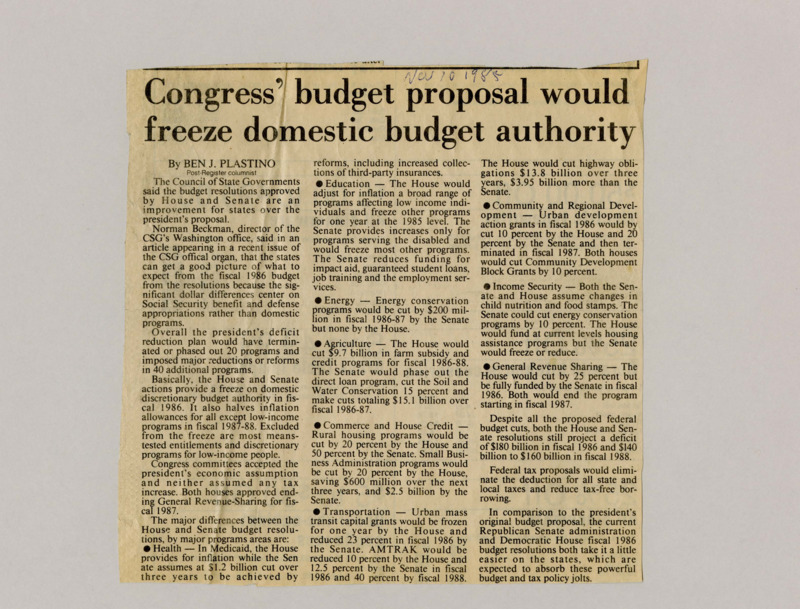
Some of the more difficult aspects of Idaho life are byproducts of a public that has not been made aware of Idaho’s past, often through no fault of their own. Some of the hardest difficulties public education is currently facing are rooted in ideology that goes back nearly half a century. Despite those shortfalls in funding, we see a sense of hope that our local communities, for the most part, are not afraid to do what they can to ensure an adequate education for all children within their communities. There have been those who are in favor of minimizing the money spent on public education, but historically, Idahoans step up. There are many things that could cause negativity and pessimism regarding the current reality we live in, but the main thing I have learned through this collection is the fact that there are many who wish to see a better Idaho and who take the losses, but move forward and find a way to honor their responsibilities. Whether it is teachers doing more with less, families trying to live in a more expensive world, or your average citizen finding the courage to keep fighting, many Idahoans, more often than not, will continue to fight and not allow the negatives to be our defining reputation.
Overall, the Ben J. Plastino Collection taught me that Idaho is more than just its politics, it’s the people who make the best out of a hard situation and move forward with the best interests of the state at heart. Regardless of what legislation has passed, or arriving soon in the future, the only hope is that we learn from our past and strive to make this state a better place for all who call Idaho home. My time with the fellowship was a rewarding process that has only since further motivated me to develop my knowledge surrounding Idaho and its public education system and do my part to make this state a better place for all. I am grateful to all those who helped me along the way, and to my fellowship committee who helped me become a better writer and more informed citizen of the state I choose to call home, Idaho.
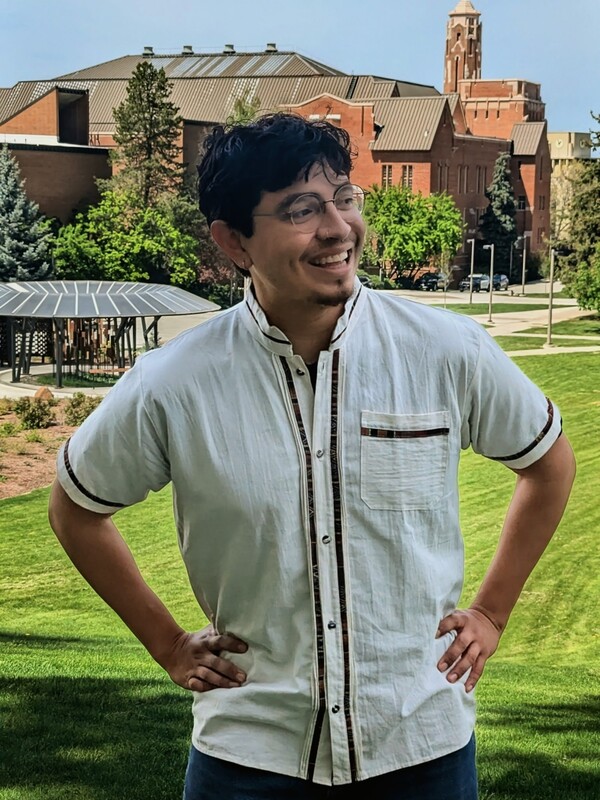
Antonio Isiordia is a second-year M.A. student in English at the University of Idaho. He researches educational policies and practices in the state of Idaho from the 1960s to present day. Isiordia completed the Ben J. Plastino Fellowship in the summer of 2026, which was generously supported by the Plastino family. He will be incorporating the research he completed as a fellow into his thesis. Prior to his Master’s degree, he taught high school English in Washington and Idaho.