

Post written by Abbie Youngberg, Gary E. and Carolyn J. Strong Special Collections Fellowship
Not many people get to say that they time traveled over the summer. Now, I know how that makes me sound, starting with a line like that. Perhaps a young child trying to make their summer adventures sound more exciting than they actually were. Maybe an overzealous teacher who was trying to elicit the excitement of a disinterested high school history class. In all reality, I am a bit of both.
As a historian and cultural anthropologist, spending my summer sequestered away in the basement of the University of Idaho Library sounded like an adventure. The collection I was called on to process and catalog was donated by Idaho State 4-H office, containing items dating all the way back to 1927. The most recent item was a group photo from 2010. That is 80 years of Idaho 4-H documentation! Though I knew I was missing precious time in the sun, I just could not pull myself away from the history those 8 boxes of 4-H materials held.
My personal experience with 4-H is extremely limited. I can remember in my childhood years going to county fairs and seeing the 4-H entries. Contests like homemaking or crafts boasted projects like home-made dress, tediously decorated cakes, flower arrangements, or even small business ideas planned and carried out. I, personally, loved walking through the stalls to see all the beautiful animals groomed to perfection.
My mother would reminisce on her days in 4-H as we’d walk through the exhibitions. There seemed to be a sense of pride that settled over her as she explained her experiences in the classes and exhibitions of her own handiwork. My lovely mother won prizes for her baking, table setting, and sewing entries. Looking back, many of the skills my mother passed onto my siblings and I must have come from what she learned in 4-H. Though I never participated in 4-H myself, I’ve always had a secret desire to be part of something so novel and transformative. And so, going into this project, my knowledge was limited, but my excitement was uncontainable.
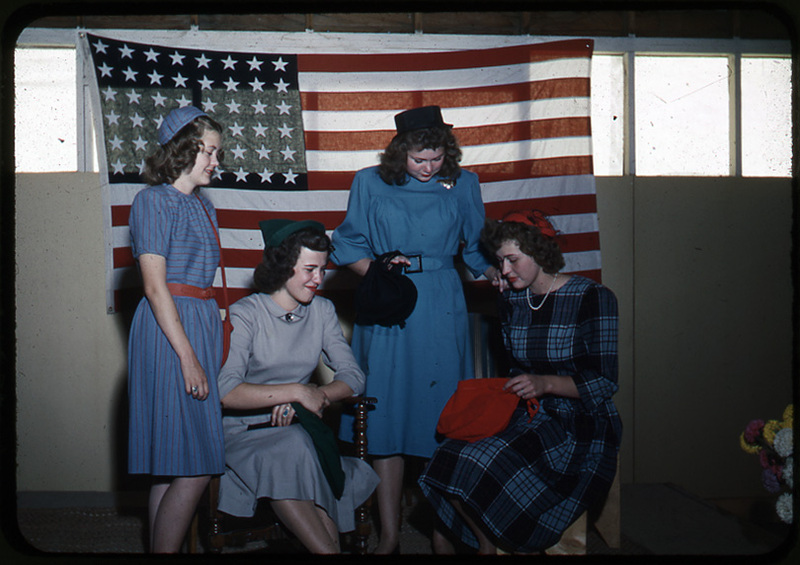
For nearly a month of my summer, I spent my mornings donning blue rubber gloves and sifting through mountains of pamphlets, photos, newspaper articles, and a myriad of other media forms. One of my more monotonous tasks—which quickly became my favorite—was carefully placing individual slides into plastic protective sleeves. A ‘slide,’ for the information of my younger readers, is a small snip of transparent film, surrounded by a slightly larger rectangle of cardboard.
At first, I relied on the overhead lights in the archives, angling my neck at just the right angle, to see the image on the slide. Once I identified what was going on in the image, I was able to categorize and find it a home in a sleeve protector. I quickly came to realized that process was costing me precious time and energy. And so, I asked for a light box.
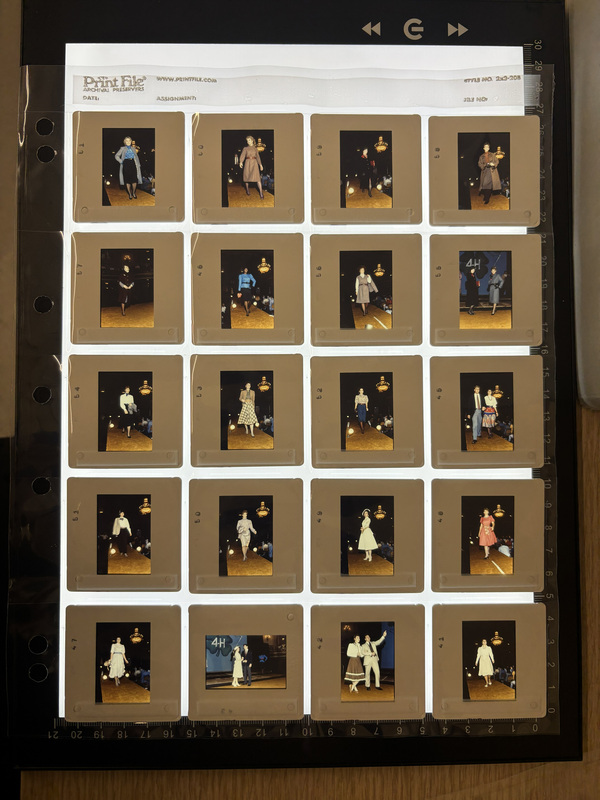
My time machine was a tablet-shaped device. Just larger than a standard size piece of paper, my light box made the images on those slides glow and come to life. I saw the lives of young people from ages past move from slide to slide. Young people laughed and chatted with senators at banquet tables; youths gathered in gyms and parks to converse and debate; teens posed proudly with projects and products they had made themselves. The 4-H program didn’t just bring them together; it gave young people a purpose.
The historian in me loved to see what life was like across that 80-year period of documented 4-H experience. Digging through the black and white photos, the old VHS tapes, pins and pamphlets, and newspaper clippings made my heart happy; I was transported back to a time of tradition and involvement not often seen anymore. The anthropologist in me, though, couldn’t help but pick out the patterns. Across all the items in the Idaho State 4-H records, it was clear to see that the programs were designed with a very specific purpose in mind. 4-H was offering young people the chance to experience and learn values like hardwork, leadership, citizenship, critical thinking, and confidence in Idaho’s young people.
If you want to know what is important to a group of people, look at what opportunities they afford their young people. What is being taught by way of values and skills? How are the youth learning, growing, and developing?
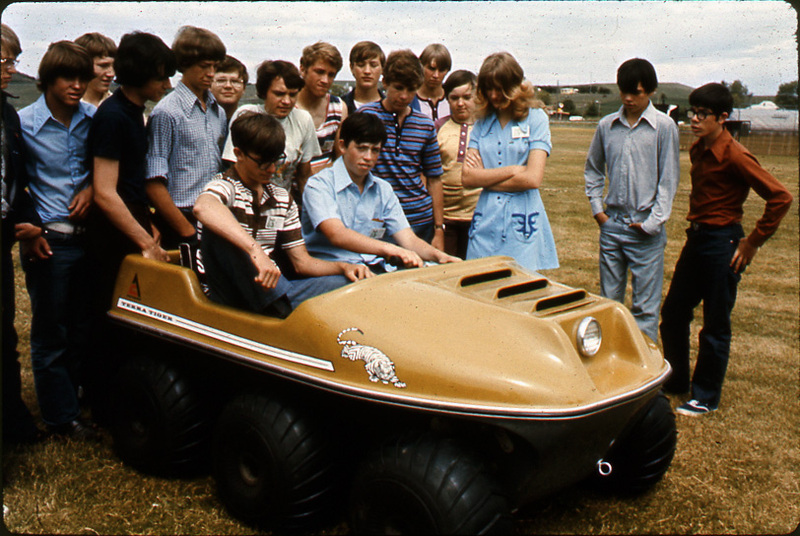
4-H provides the opportunity for young people to develop the skills necessary to be contributors in society. These skills, while they reflect well on the youth, are wholly for the benefit of their homes, families, and communities. Stick-to-itiveness, passion, work ethic, and problem solving are all qualities learned in 4-H, and are applicable in every aspect of life. Teaching by hands-on experience is vital. The retention of these skills is increased by the chance to practice, use, and exhibit them in classes, workshops, and contests. 4-H goes far beyond keeping tradition alive, it is training up the next generation of citizens.
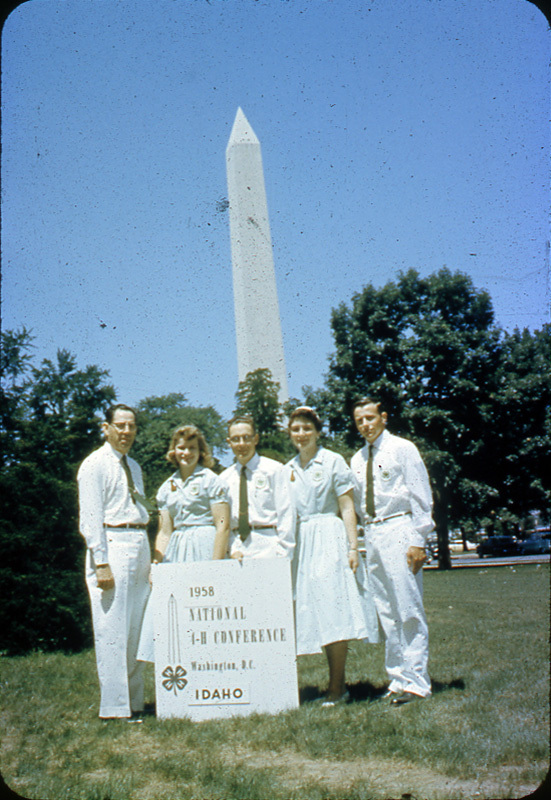
I interacted with 80 years of 4-H in Idaho. What amazed me was to see the excitement youth had for such varied aspects of development and growth. Know Your Government conferences got teens involved in their local and state governments. Trips to Washington D.C., Chicago, and Hawaii exposed them to the world. Banquets, festivals, and service projects brought youths together under common causes. The 4-H program set young people up to be engaged with the world and to be successful within it.
The University of Idaho’s archival record of our state’s 4-H program came to an abrupt stop in 2010. 4-H is certainly still around though; I see their projects every year in my local county fair. Today’s younger generation live in a vastly different world than those youth I saw in photographs and slides. Our hair styles are different. We wear different clothes. The quality of our pictures has even gone up. However, I would argue that the skillsets needed to be engaged citizens and active contributors to our communities have not changed.
Our world needs well-rounded people. People who are ready to use their talents and abilities to improve the lives of those around them. And I believe 4-H is raising that generation of people.