

In November 1936, the University of Idaho’s Argonaut student newspaper announced the winner of Dad’s Day’s award for the father “most prolific in the matter of sending students to the University of Idaho.” The silver cup went to Adrian F. Nelson, an 1897 graduate, for the second year running, as he had sent eight children to the U of I. Another silver cup went to the dad who had traveled farthest to get to Moscow: Carl Paulsen of Washington, D.C.
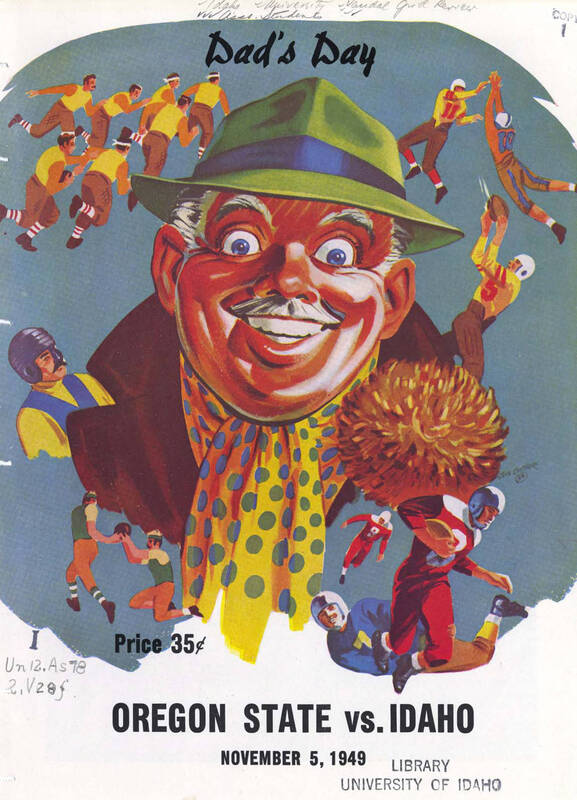
Dad’s Day at the University of Idaho began in the mid-1930s, built around a Vandals home football game, typically in October or November. Students did most of the organizing, and the program of events grew each year. There were Friday night rallies led by the Pep Band, boxing matches, dances, barbecues, and concerts featuring acts such as the Lewiston fife and drum corps and the folk music group the Limeliters.
Dads received free or discounted tickets to the Vandals football game and other weekend events, and in some years they could sit in the stadium’s student section. Living groups, led primarily by fraternities and sororities, competed for awards based on which had the greatest number of dads visiting and the best house decorations. Students grew beards for weeks in anticipation of contests for longest beard and most stylish beard, judged by dads in some years and by women students in others. Moscow businesses were happy to join in on Dad’s Day: in 1935, Jerry’s Confectionery posted a large ad in the Argonaut: “We Welcome Your Dads to Moscow. Try one of Jerry’s large Milk Shakes.”

The weekend’s competitions and awards for dads changed over time, evolving along with what the programming committee valued in a father. In the 1930s, dads were honored for numbers: children sent to U of I, miles traveled. By the 1960s, an alumni committee chose a Dad of the Year, judged on his activities as a student, his life since graduation, and his “contribution to the U of I and society.” In the 2010s, the award was based on essays students wrote about their fathers, putting emphasis on the family relationship rather than an impressive resume.
The Dad’s Day tradition itself has gone through significant changes over the decades. It appears to have lapsed during World War II; Dad’s Day events were held in late 1941 and not mentioned again until 1946, when the “long abandoned Dad’s Day” was revived. By the early 1970s, a single spring Parents Weekend or Family Weekend was the draw for students’ family members. Fall Dad’s Day or Dad’s Weekend returned in 1991, complemented by Mom’s Day in the spring. One student organizer later suggested that the revived split reflected rising divorce rates across the country - students with divorced parents wanted a weekend visit for each.
The family members attending Dad’s Day continued to change as well. It was never just dads who wanted to visit in the fall; organizers noted that moms, aunts, uncles, and family friends often came too. In 2019, the university replaced the separate Dad’s and Mom’s weekends with a Parent and Family Weekend each semester, open to anyone a student wanted to bring.
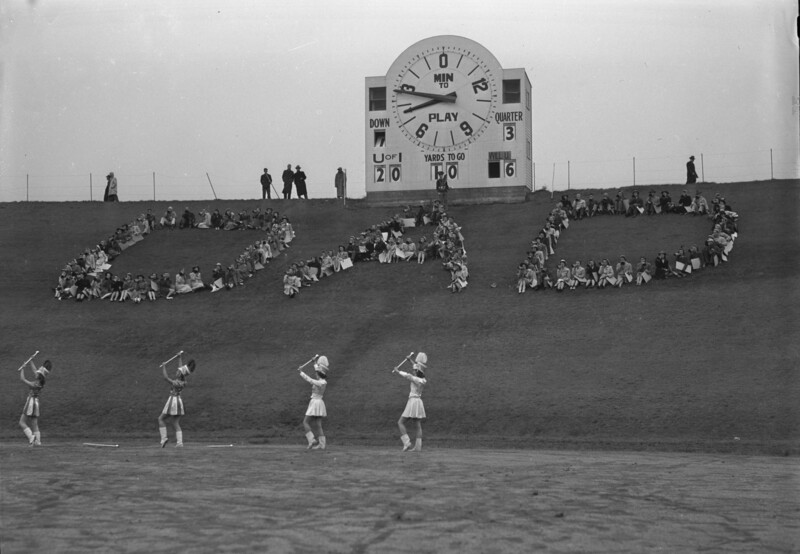
Although the tradition has evolved, its place in university and Moscow life has not. Students host their parents and show off the university, local businesses benefit from increased visitor traffic, and everyone cheers on the Vandals. This year’s Parent and Family Weekend takes place November 6-8.
(This piece first appeared in the Moscow-Pullman Daily News)