

Post written by Ash Hunter, 2025 Gary E. and Carolyn J. Strong Fellow
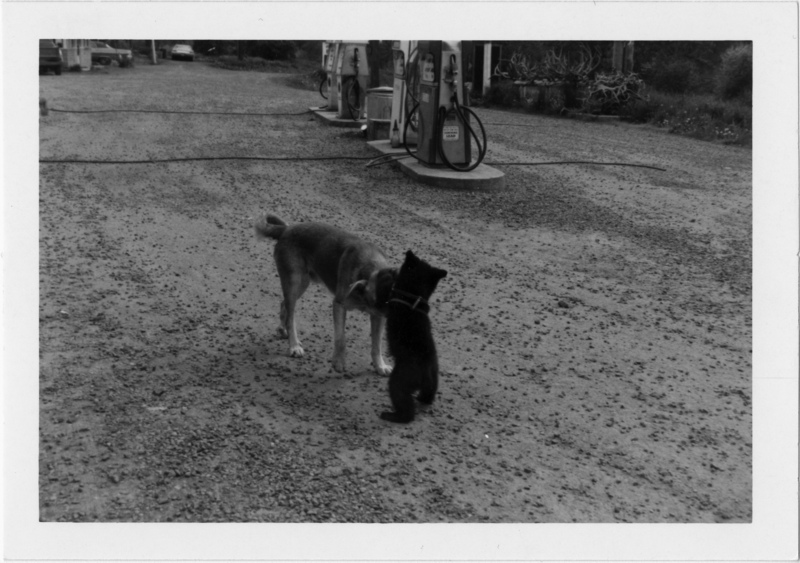
As a PhD student studying historical archaeology, I have to spend a lot of time poring over old documents. Yet, archival research isn’t foregrounded in most archaeological education; it’s simply something we must figure out as we go along. The Strong Fellowship provided the ideal opportunity to get hands-on experience with archival materials. Processing photographic prints is a relatively simple task: you provide a brief description of the photograph itself and then transcribe any written information on the photograph. However, when you’re dealing with photograph numbers in the thousands, the process quickly becomes old. Luckily, the Nez Perce-Clearwater National Forest collection contains diverse subject matter, so if I came across a dull selection of photos (such as a construction project), I knew it wouldn’t be too long until I had something new to look at (such as this adorable dog and bear cub photo). The process was much more time-consuming than I expected; although it is simple, it takes a significant amount of time and energy. I quickly realized that I would not be able to process even a quarter of the approximately 15,000 prints in the collection; it took me eight weeks to process 1,500 photographic prints.
As this collection was predominantly collected and organized by Forest Service archaeologists, I am grateful that I was able to view the photographs from the perspective of a fellow archaeologist: how could these photographs be used to better understand the history of the National Forest? Do the photos themselves have value as material culture? And is archaeology present in these photographs? These three questions, while not overtly part of processing the photographic collection, were constantly in my mind as I worked with these photographs.
When I initially learned about the collection, I knew that it covered a broad chronological span, but it wasn’t until I began to process the photos that I realized just how broad that span was. Of the 1500 photographs I processed, the earliest date back to the turn of the twentieth century, while the oldest stretch into the 1990s; nearly an entire century of the forest’s history is contained in these photographs. Between the range of time and range of topics covered, which include everything from recreation to forest management practices to the landscape itself, this collection provides valuable insights into the history of the Nez Perce and Clearwater National Forests.
Photographs are a unique form of material culture that has value as both documents and objects. The prints that make up this collection range in size, shape, and type; while most photographs were standard prints from a roll of film, Polaroid photos popped up every now and then – these were my favorite to process, although tricky because they are much more sensitive than standard prints. I believe that the value of photographs as material culture (artifacts) is less in the physical makeup of the print and more in the circumstances: what technology was used to produce this photograph (camera, film, and print)? Who took this photograph, and why? The beauty of photography is not only in how it captures a moment in time, but how it reflects the person who took it and their perspective at that moment.
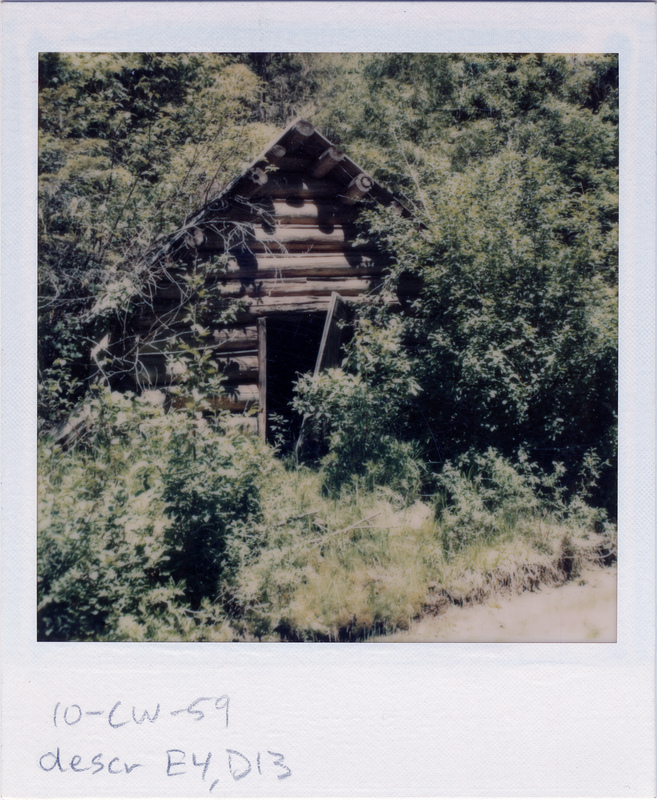
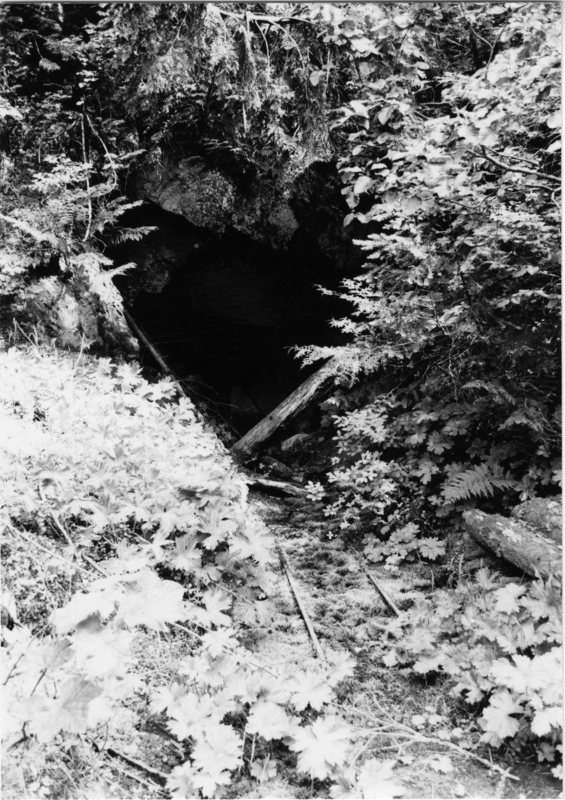
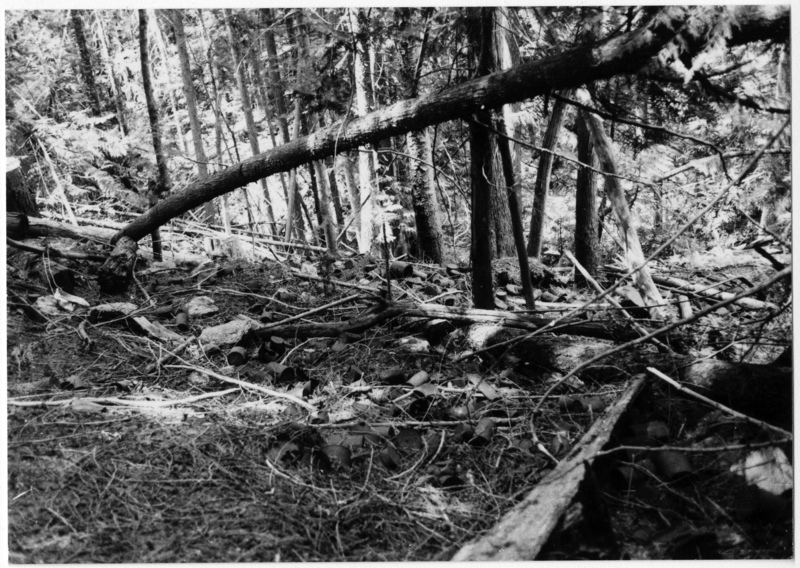
Finally, archaeology was not nearly as present in the photographs as I had hoped; however, there were a few instances documenting materials and sites of archaeological interest. A chunk of about 20 photographs near the end of the 1500 photographs I processed contained archaeological subject matter including historical trash dumps, historical buildings and building remains, and some materials and sites related to mining. These were the photos I had been hoping for: documentation of the material history of the forest through the lens of archaeology. I’m probably the only person to get excited over photographs of rusty cans and decaying buildings!
Being a Strong Fellow was a wonderful experience, even beyond the clear educational value of working with a historical photograph collection. The employees, both regular staff and fellow students, and the vast archives below the library provided such a warm, friendly environment for me to learn about archival practices. I was able to get out of my comfort zone and learn something new that not only benefits my own education and future career but also learned more about local history and the beauty of the Nez Perce-Clearwater National Forest.
Resources
Nez Perce-Clearwater National Forest and Forest Service Historical Photograph Collection