

On May 4, 2003, University of Idaho researchers celebrated the birth of an extraordinary mule foal. Idaho Gem, as the foal would be named, was both the world’s first cloned mule and the first successful clone of an equine. The announcement of Idaho Gem’s birth, published in Science, marked the culmination of years of painstaking work from a team under the leadership of Gordon Woods and Dirk Vanderwall, both of the University of Idaho’s Northwest Equine Reproduction Laboratory, and Kenneth White of Utah State University.
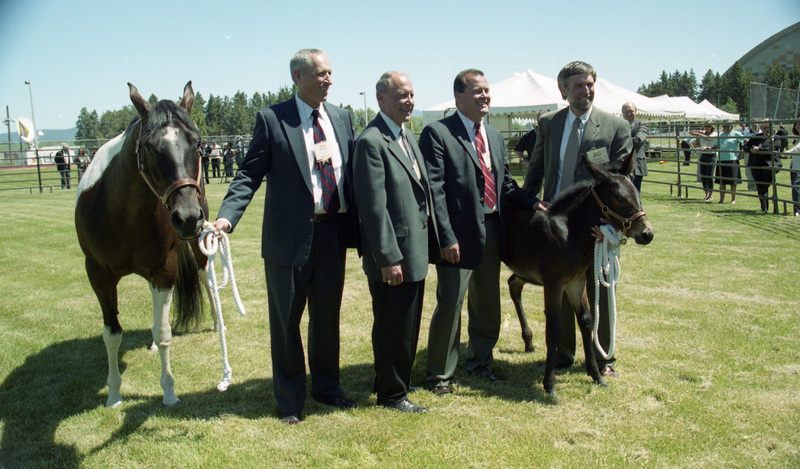
This was the University of Idaho’s entry into a competitive international animal cloning scene. Research teams from Italy, England, Texas A & M University, and Louisiana State University all aimed to be the first to clone a member of the horse family. Equines present unique cloning challenges. Horses have unusually low calcium levels in their red blood cells, which causes embryos to divide slowly. The University of Idaho team discovered that enriching calcium levels sped up embryonic development, a breakthrough that eventually led to a successful equine clone pregnancy.
Idaho Gem was soon joined by two genetically identical clone brothers, all created from the cells of a mule fetus collected in 1998, and each carried by a different mare. On June 9, 2003, Utah Pioneer was born, demonstrating that the cloning process was repeatable. A third clone, later named Idaho Star through a children’s contest, arrived on July 27.
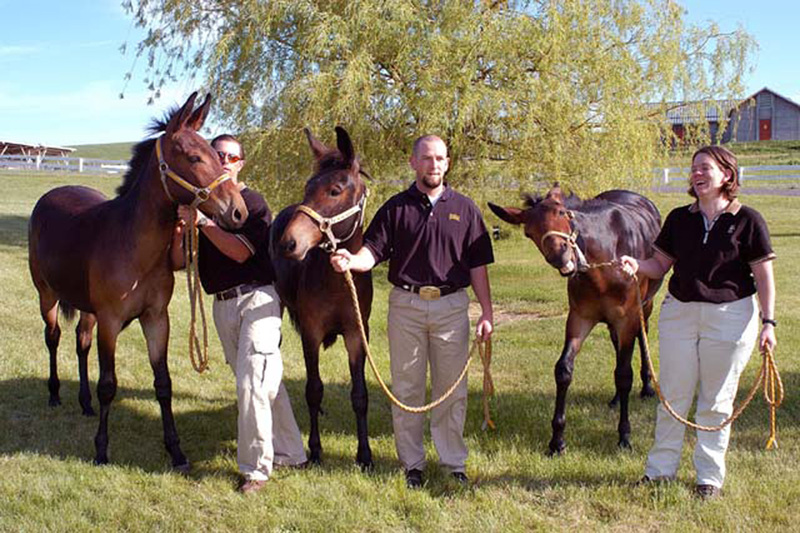
The project attracted international attention. French scientist Eric Palmer traveled to Moscow to observe the work firsthand. Equine cloning offered potential pathways to preserve endangered horse species, to use horses as research models for human diseases, and even to advance cancer research. The team’s discoveries about the connection between cloning, calcium, and cell division pointed toward new understanding of equine resistance to certain cancers. Mule cloning also had the potential to further research about sterility in hybrid animals.
The scientific implications of the research were clear, but the project was also driven by a competitive sport: mule racing. Don Jacklin, president of the American Mule Racing Association, largely financed the research. He owned Taz, a champion racing mule. While the bloodlines of valuable racehorses might be preserved through breeding, champion racing mules, as sterile hybrids, take their genetic lines to the grave. The three mule clones were not copies of Taz himself, but they were his full siblings, sharing the same genetic parents. For the mule racing community, cloning offered the possibility of preserving valuable genetic combinations.
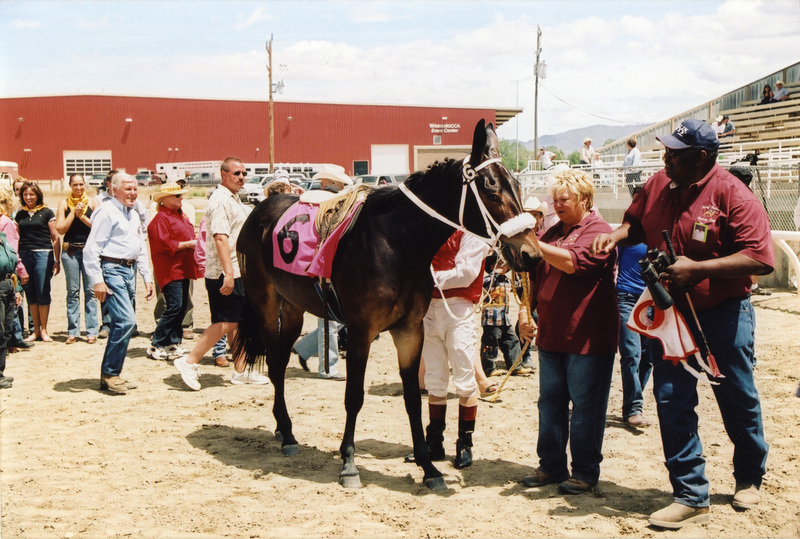
Idaho Gem and Idaho Star eventually trained for racing, leased to Jacklin and Roger Downey, vice president of the American Mule Racing Association. On June 3, 2006, in the first mule races to include clones, the two mules won their qualifying heats at the Winnemucca Mule Race, Show & Draft Horse Challenge. Idaho Gem went on to win several more races. Utah Pioneer, never a racing success, was trained as a saddle mule.
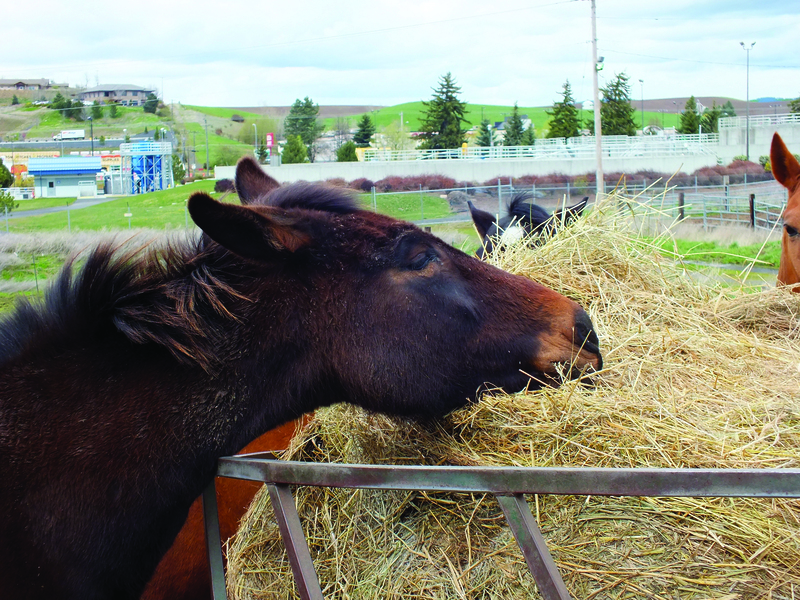
Each clone developed a distinct personality, proving that genetics is only part of what makes an individual, and each eventually went his own way. Utah Pioneer spent years as an educational ambassador on the University of Idaho campus in Moscow before his death. Idaho Star became a riding mule for a young equestrian in Latah County, while Idaho Gem, after his racing days, retired to a ranch in Texas.
The Northwest Equine Reproduction Laboratory closed after Woods and Vanderwall left the university in 2006 and 2009, respectively, and the lab’s funding was redirected toward other equine programs. Yet its work left a lasting legacy, having achieved a remarkable scientific first for the University of Idaho.
(This piece first appeared in the Moscow-Pullman Daily News.)