

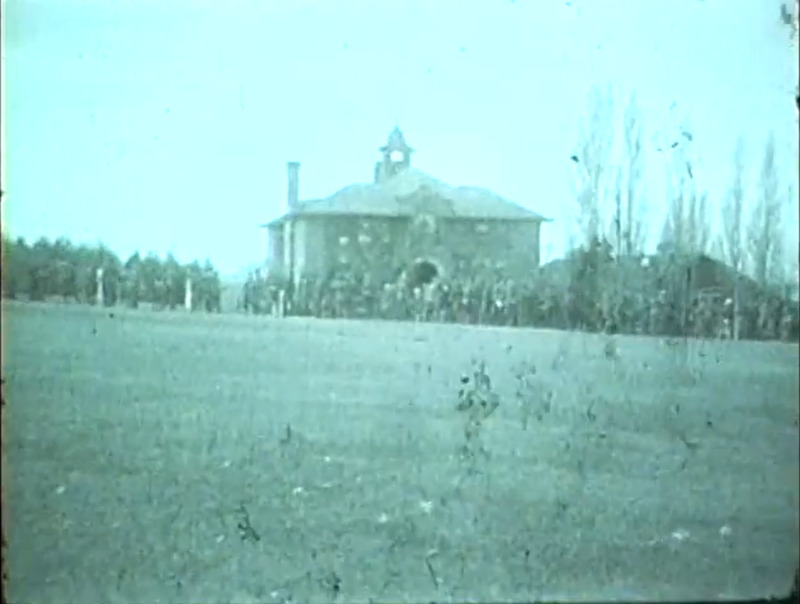
In the early morning of Friday, March 30, 1906, the University of Idaho Administration Building burned down, taking with it nearly the entire contents of the university’s library. Other than items out on loan, the library’s collections of books, periodicals, government documents, and other materials were gone.
Mary Belle Sweet had started as the university’s librarian only the previous November. In the months before the fire, Sweet had brought order to the library’s scattered collections and bolstered its contents, spending $1500 on new books. By January 1906, Sweet felt that, with the university community’s patient support, “there is every reason in the world for expecting to accomplish a great deal.”
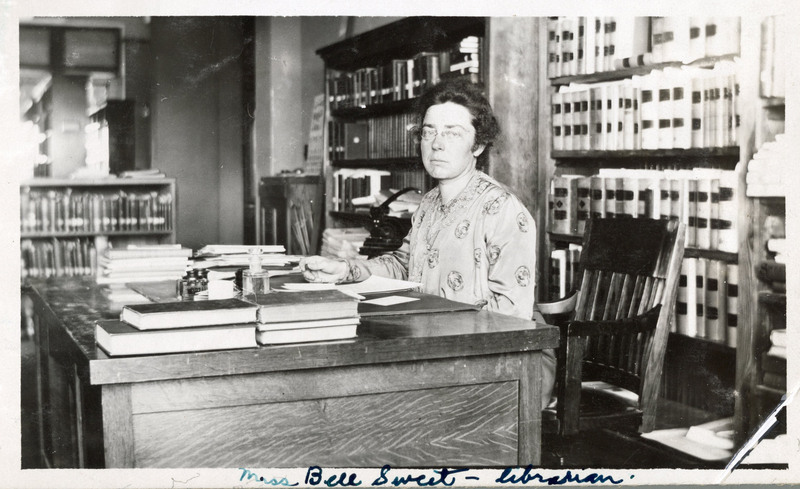
The fire was a terrible setback. Aside from books on loan, Sweet wrote, “our library is a total loss.” On Monday morning after the fire, the library, relocated to the university gymnasium, consisted of the checked-out books and two sacks of mail containing the library’s usual shipments of government documents and newspapers. Despite the loss, Sweet wrote that “all of the work is to go on in the best possible manner.” Sweet began a sweeping and energetic letter-writing campaign, seeking aid from anyone connected to the university, Idaho, and the world of books.
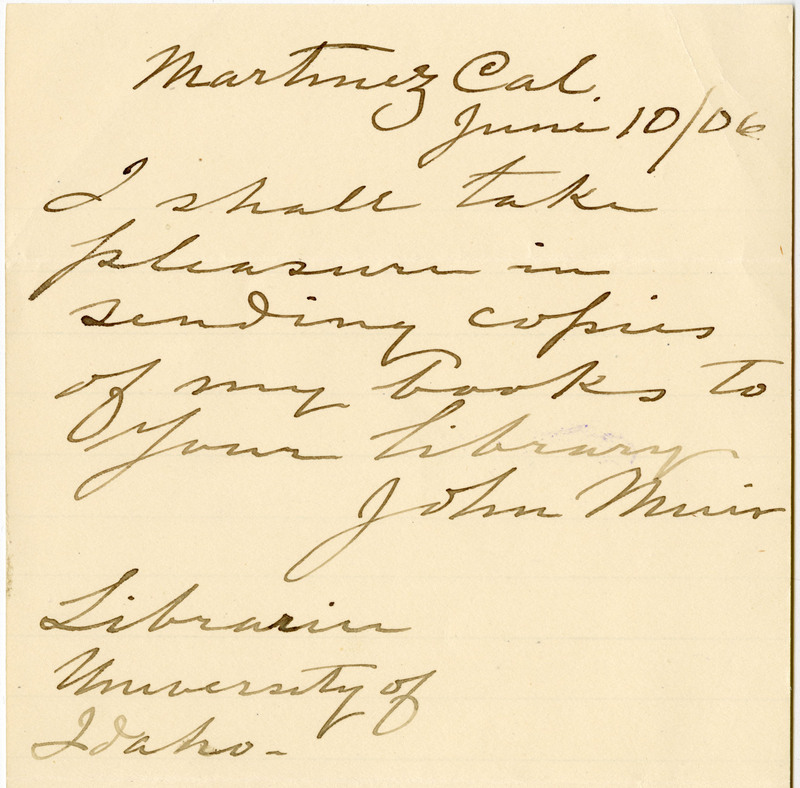
During the spring and summer of 1906, Sweet corresponded with hundreds of individuals, institutions, and organizations across the country. Idaho’s U.S. senators, Fred Dubois and Weldon Heyburn, solicited document donations from federal agencies and departments. Herbert Putnam, Librarian of Congress, offered to donate Library of Congress publications. Sweet received promises of books from naturalist John Muir and philosopher Josiah Royce, among many other published scholars. The University of Michigan Library sent 360 volumes, and E. Benjamin Andrews, the University of Nebraska Chancellor, sent 138 volumes, freight prepaid. A Spokane lawyer offered a complete set of Thomas Jefferson’s works. This correspondence reflects sympathy and generosity from a disparate community united around the project of rebuilding a library.
While these gifts from beyond Idaho were instrumental in reconstituting the library’s collections, Sweet later recalled that most impressive “was the response of the people of the state, particularly of the northern part, to the needs of the University at that time.” The University of Idaho Club of Boise amassed a donation of over $800, including $100 from William Edgar Borah. Smaller local donations also added up: $14 from Moscow High School, $50 from the Ladies Historical Club of Moscow, and many more. Edward M. Hulme, a University of Idaho history professor, donated 64 volumes, and 21 more came from Julia Moore, a wealthy local businesswoman. As Sweet remembered, nearby communities held “benefit card parties and sent the proceeds to the Library. One little town sent $132. Many of the fire departments in the smaller towns sent donations.”
In the Library Committee Meeting notes of October 8, 1906, the results of the campaign to that point were tallied up: “In all, about 1300 books, 250 pamphlets and a fund of $1866.35 have been received as gifts. Orders to the amount of the fund have been placed and many of the books have been in use for several months.” The library’s collections had grown to include over 3000 books and over 5000 government documents. Whether or not Sweet welcomed the words of a correspondent who congratulated her on the opportunity “to start afresh without having to build upon the mistakes of other people,” the library had indeed begun anew. In the eighty years since the fire, Sweet and successive generations of librarians continued to build upon this foundation, transforming the University of Idaho Library into the largest in the state.
(This piece first appeared in the Moscow-Pullman Daily News).