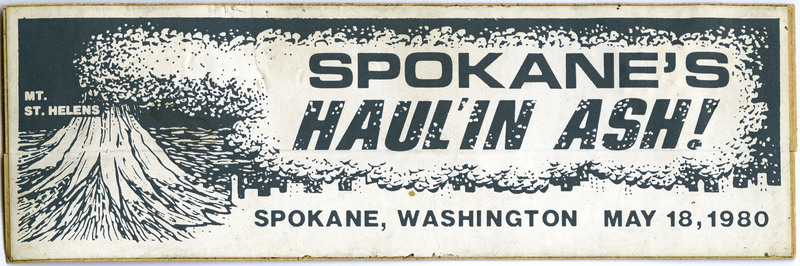

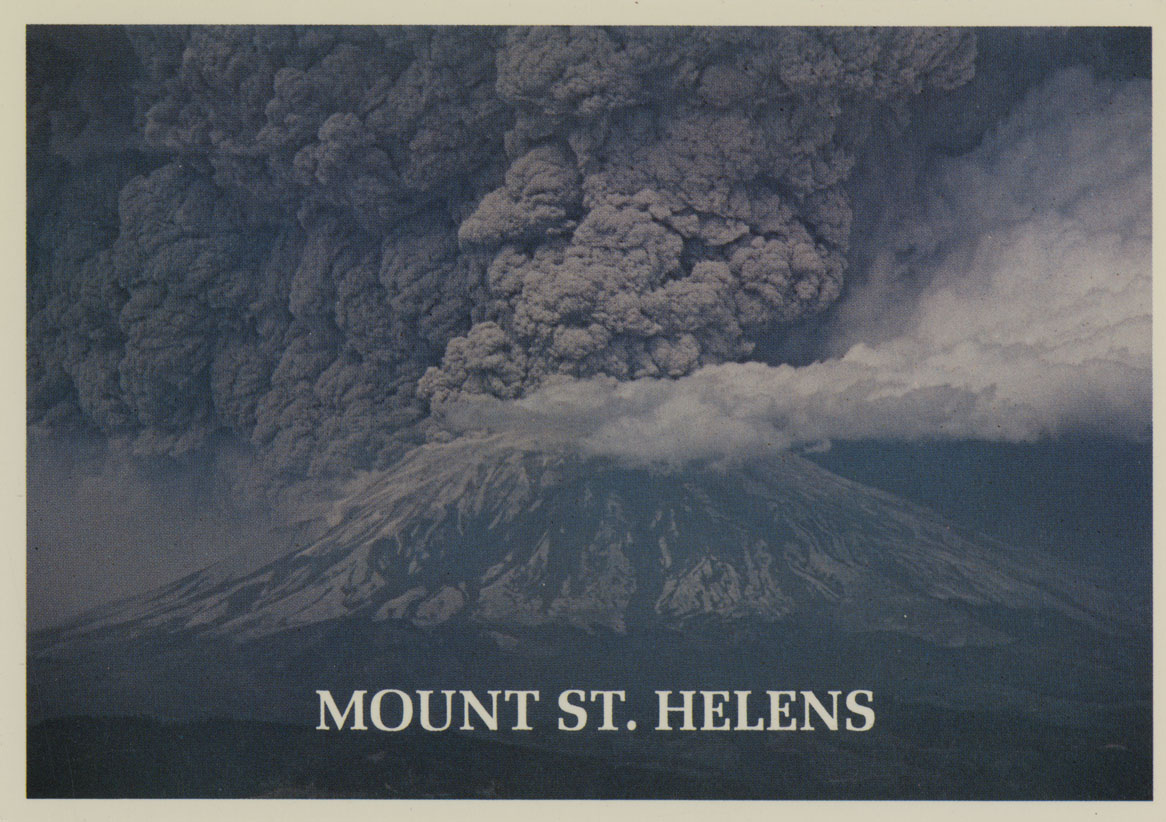
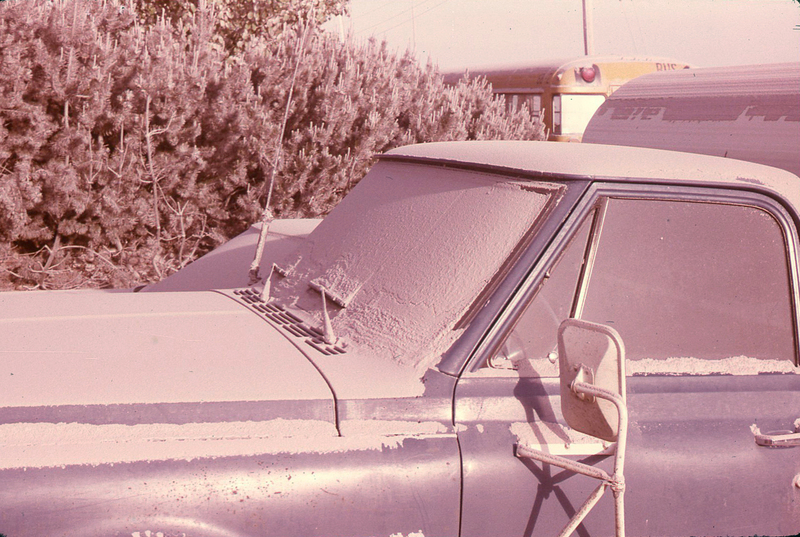
On May 18, 1980, Mt. St. Helens erupted, devastating forests, lakes, and rivers in its vicinity and launching volcanic ash far into the atmosphere. An easterly wind carried the ash cloud across Washington to the Palouse (and eventually around the globe). Although the Moscow area did not receive nearly as much volcanic ash as parts of central Washington, the half inch or so that it did receive resulted in significant disruptions to everyday life in the area.

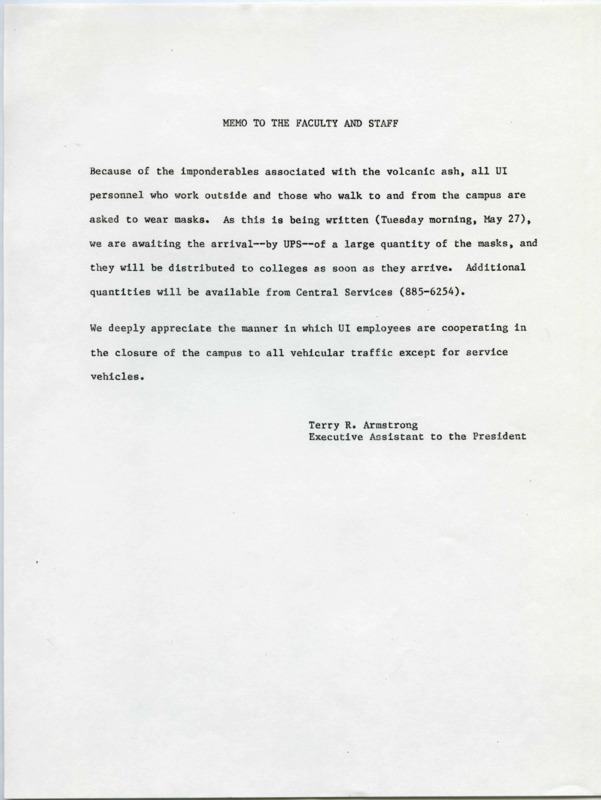
The eruption came the day after commencement ceremonies at the University of Idaho, held Saturday, May 17, 1980. Following the eruption on Sunday, campus remained closed May 19 through May 21. Uncertainty about the effects of ash on human health led campus authorities to recommend mask-wearing for employees while they were outdoors.
Ash cleanup was expensive and sometimes frustrating. The ash had a fine, slippery texture - it drifted easily from place to place, making it difficult to shovel effectively. (This author’s mother, a resident of western Washington in 1980, recalls fruitless attempts to wash the ash off of her rhododendrons with a garden hose, finding that the ash’s texture caused it to behave somewhat hydrophobically.) University of Idaho Physical Plant personnel and the Moscow Fire Department worked to clean campus grounds and buildings with shovels and fire hoses.
![Fire department washing ash off of university buildings [3]](https://objects.lib.uidaho.edu/harvester/small/pg136-1-14-003_sm.jpg)
![Fire department washing ash off of campus grounds [1]](https://objects.lib.uidaho.edu/harvester/small/pg136-1-14-004_sm.jpg)
![Fire department washing ash off of university buildings [2]](https://objects.lib.uidaho.edu/harvester/small/pg136-1-14-002_sm.jpg)
![Fire department washing ash off of campus grounds [2]](https://objects.lib.uidaho.edu/harvester/small/pg136-1-14-005_sm.jpg)
![Fire department washing ash off of university buildings [1]](https://objects.lib.uidaho.edu/harvester/small/pg136-1-14-001_sm.jpg)
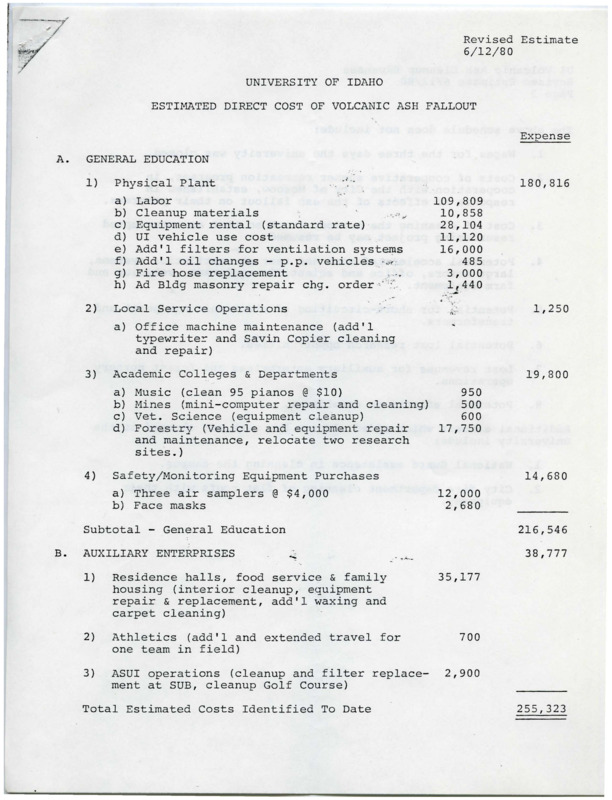
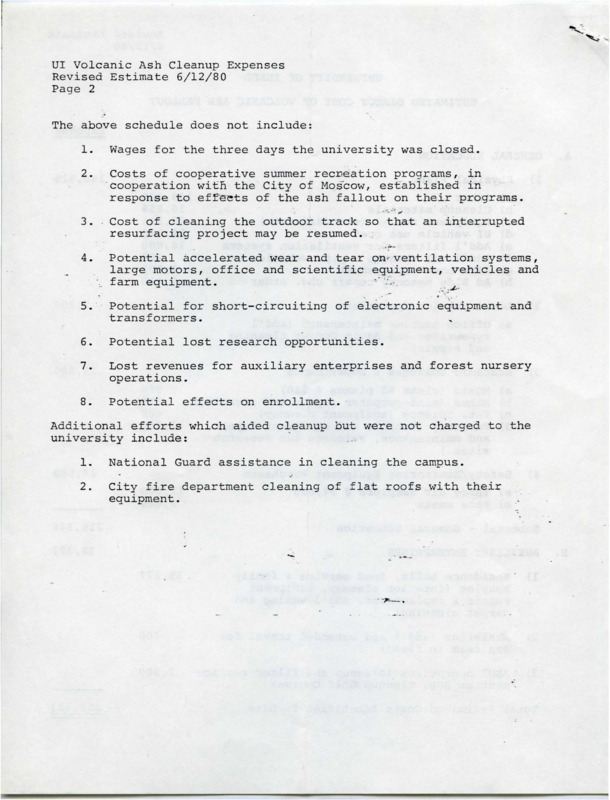
The estimated direct cost to the University of Idaho from Mt. St. Helens ash fallout came to over $250,000. The greatest expenses were related to the Physical Plant cleanup and repairs, with smaller costs from cleaning pianos, purchasing face masks, and relocating College of Forestry research sites.
Following the eruption of Mt. St. Helens, university officials developed an emergency plan (referred to as “the Ashplan” in at least one document) in case of future volcanic eruptions and ash fallout. This was a (heavily reworked) version of the university’s nuclear fallout emergency plan, instituted decades earlier. If the University of Idaho still exists the next time a sizeable volcanic ash cloud floats over the Palouse, we will be better prepared to meet it.